The post Washing Symbols Explained appeared first on bio-home by Lam Soon.
]]>

To keep your clothes in good condition longer, you’ll want to understand what those puzzling symbols on your tags mean. Use this complete guide to help you interpret washing symbols.
1. Washing symbols
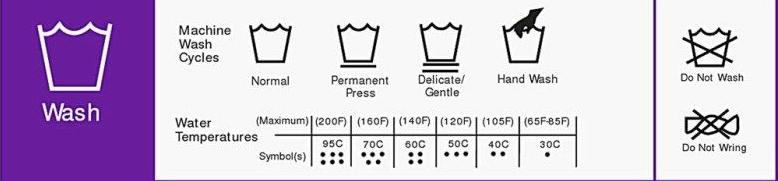
Along with using the right type and amount of detergent, picking the right washing cycle on your machine is vital for avoiding damage, shrinkage, or discolouration when cleaning your apparel. Getting the temperature right is also important for great laundry results, as certain types of fabrics require different methods of care.
Washing symbols are often depicted on the labels inside your clothes & apparel as a guide to help you choose the right wash setting and temperature. Some fabrics are very delicate and therefore need to be hand-washed in cold water. This will be depicted by the logo of a bucket with a hand as well as one dot which means 30ºC (cold water).
- Normal – The bucket filled with water tells you it’s okay to use a normal wash cycle.
- Permanent press – The permanent press symbol is a full bucket with a line underneath. This tells you the fabric has been treated with chemicals to prevent wrinkles and protect the original shape. If you see this symbol, avoid ironing the item.
- Delicate/gentle – The delicate/gentle symbol has two lines running under a full bucket. If you have this symbol on your tag, it’s probably a wool, silk, or other type of delicate, so always use the delicate or gentle cycle on your machine.
- Hand wash – If there’s a hand insider or above a full bucket, always hand wash and never machine wash. Use a hand-wash-friendly detergent.
- Temperature – The dots inside the bucket for any of the above symbols give you information about the maximum temperature for the wash cycle. One dot represents 30 degrees Celsius, two dots means 40 degrees Celsius, and three dots 50 degrees Celsius. Four dots means you can wash at up to 60 degrees Celsius, five dots at 70 degrees Celsius, and six dots at 95 degrees Celsius. Some tags have a number inside the bucket instead of dots. This number is the maximum allowable temperature.
- Do not wash – If a full bucket is crossed out, never machine or hand wash the item. The item likely can only be dry cleaned.
- Do not wring – If there’s a crossed-out wring symbol, never hand wring the item to squeeze out water.
2. Bleaching symbols

The bleach symbol is a triangle. If this appears on the garment’s fabric care label, you can use bleach as needed to make your whites even whiter. However, if you see a triangle with diagonal lines inside it, this means it can only be bleached with non-chloride bleach. A triangle with a cross through it means the garment cannot be bleached, and doing so may damage or discolour the fabric.
Bleaching can be used to keep sheets and linen white & bright and to brighten white clothing or fabric to lift stains or soil. There are three main types of bleach; chlorine bleach, oxygen bleach, and hydrogen peroxide. Chlorine bleach is the most common bleach for laundry use, although some fabrics require non-chlorine bleach. Pay attention to the garment care label to see if you need to add bleach to your detergent or to soak in a bucket with hot water.
- Non-chlorine bleach only – If there’s a bleach symbol with two diagonal lines inside, this means you should use only non-chlorine bleach, as needed.
- Do not bleach – A filled-in triangle that’s crossed out means you should never use bleach on that clothing item.
3. Drying symbols
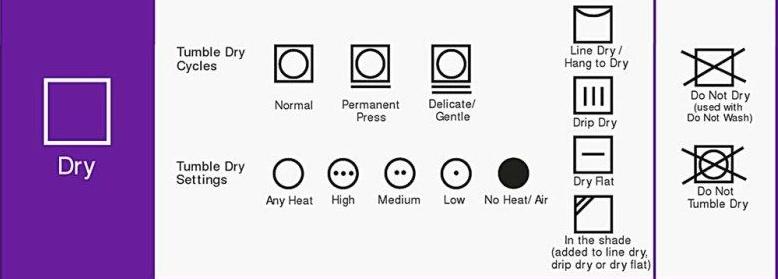
An empty square represents the drying symbol. Different variations of this will tell you the best way to dry your clothing item. As some fabrics such as lace, wool, and silk get damaged in a dryer, it’s important to read the garment care label before putting your load of washing through the tumble dryer.
To prevent your garment from shrinking, scalding, or becoming misshapen, follow the drying symbols that instruct you on the best way to dry your garment. Knowing the common drying symbols such as the square with a circle in it (meaning tumble drying is allowed) will prevent you from fetching clothing out of the dryer that has shrunk three sizes too small.
- Normal tumble dry – A circle inside the square means it’s okay to use the normal tumble dry cycle.
- Permanent press dry – A normal tumble dry symbol with a line underneath it means you should use the permanent press dry cycle.
- Delicate/gentle dry – If there are two lines under the circle inside a square, you should use the delicate/gentle dry cycle.
- Heat setting – You might have dots inside the circle for the above symbols. No dots means any heat setting is fine, while a coloured in (black) dots means you should only use the No Heat or Air Dry setting. One dot means to use the low heat setting, while two dots recommends the medium heat setting. Three dots means it’s okay to use the high heat setting.
- Line dry – A square with a curved line at the top means you should hang it to dry or line dry it.
- Drip dry – The square with three vertical lines inside it means the item should drip dry.
- Dry flat – If the square has a horizontal line inside, it means the item should be laid flat for drying.
- In the shade – If the square has two diagonal lines in the upper-left corner, it should be dried in the shade, whether line, drip or flat drying is recommended.
- Do not dry – The crossed-out square usually comes with the Do Not Wash symbol and it means you shouldn’t dry the item.
- Do not tumble dry – The crossed-out Normal Tumble Dry symbol means you should never tumble dry the item.
4. Ironing symbols

The iron symbol tells you it’s fine to iron the item, whether it’s dry or steam ironing. Some fabrics benefit from ironing while others, such as delicate fabrics like silk, can be damaged. There are even fabrics that need certain settings when being ironed while others are fine to be ironed at any temperature setting. If the iron symbol on the tag doesn’t have any dots in it, that means you can iron your fabric at any temperature setting. If an item requires steam rather than being dry ironed, this will be depicted by two or more dots as these require higher temperature settings.
- High temperature – Three dots inside the iron symbol means it’s okay to iron the item at a heat setting of up to 200 degree Celsius.
- Medium heat – Two dots inside the iron means it’s fine to iron your clothing item at temperatures up to 150 degrees Celsius.
- Low heat – One dot inside the iron means it’s okay to iron at up to 110 degrees Celsius.
- No steam – A crossed-out iron with steam coming out under it means you should avoid using the steam setting while ironing.
- Do not iron – A crossed-out iron symbol means you shouldn’t iron the item.
5. Dry cleaning symbols

If there’s a circle on your clothing or fabric care label, this means dry cleaning is recommended for the item. If you wish to get your garment professionally dry cleaned, take a look at the label first as it may not be suitable. If your garment isn’t suitable for dry cleaning then you will see a circle with a cross through it. If dry cleaning is permitted, then the label will also provide instructions on which solvent should be used. Knowing your garment’s dry cleaning symbols will make it easier for your dry-cleaner to achieve the best clean without damaging your clothes.
- Any solvent – An A inside the circle means you can have the item dry cleaned on a normal cycle using any solvent.
- No Trichloroethylene – A P inside the circle means dry cleaning on a normal cycle with any solvent except for Trichloroethylene.
- Petroleum solvent only – An F inside the circle means normal-cycle dry cleaning with petroleum solvents only.
- Short cycle – A circle with a line in the bottom-left corner means to dry clean on a short cycle.
- Reduced moisture – If the line is in the top-left corner, dry clean on a reduced-moisture cycle.
- Low heat – A line in the bottom-right corner means dry clean on a low-heat cycle.
- No steam finishing – A line in the top-right corner means no steam finishing should be used.
- No dry clean – The crossed-out circle means you should not have the item dry cleaned.
Clothing tags often come with a range of confusing care symbols, but if you get these top four types of symbols right, you can decipher what the most common symbols mean and likely avoid damaging your clothes. By using the right cleaning products as well as the recommended wash and drying methods, you can keep your apparel in excellent condition for a longer period of time.
Achieve the best wash with 100% plant-based laundry products
bio-home is a leading brand of eco-friendly, 100% plant-based laundry products that allow you to achieve a great clean while protecting your family from harmful chemicals. Find out more about our natural laundry detergent, or contact us today for more information.
Now you’ll never ruin your laundry again, especially if you’re kept fully informed by our Complete Guide to Laundry here.
The post Washing Symbols Explained appeared first on bio-home by Lam Soon.
]]>The post The many uses of dishwashing liquid appeared first on bio-home by Lam Soon.
]]>Discover the multiple uses of the dishwashing liquid, which can lend so much more help around the house than you think.
Clean outdoor furniture
A dishwashing liquid functions well on countertops, window sills and other types of surfaces like glass and plastic. Add a small bit of the liquid to a spray bottle filled with warm water, to cleanse away the dirt and grime. Next, wipe over the soapy surface with a well-wrung cloth and allow the surface to dry naturally.
This concoction works very well on outdoor furniture or patio furniture that has been exposed to outdoor dirt and dust. The dishwashing liquid will effectively de-grime any built-in dirt or sticky buildup.
Degreasing kitchen appliances
Appliances in the kitchen require regular cleaning, as they are subject to the build-up of sticky grease and stains from cooking. Appliances such as ovens, toasters, blenders, refrigerators and griddles will benefit from the mild and friendly cleansing power of the dishwashing liquid.
Stainless steel cleaners can be very expensive (and harsh if it comes into contact with skin) so using a gentle dishwashing liquid mixed with warm water will polish off stains, fingerprints, and marks leaving your stainless steel appliances sparkling.
An effective stain buster
Oil-based stains are the hardest to remove, often leaving behind a dark stain or cause discolouration even after soaking. However, dishwashing liquid that is specifically catered to remove grease may work even better than conventional laundry detergents. In fact, dishwashing liquid is especially effective at removing food-based oils, making it a great spot treatment for stained table cloths or couch fabrics.
Dishwashing liquid also tends to be gentle enough on delicate fabrics like silk and wool, which could be easily damaged by laundry detergent due to its more potent chemical composition. The method to go about this is to dissolve around 1 tablespoon of the dishwashing liquid into 2-3 cups of lukewarm water, and carefully dab on the stain with a clean cloth dipped into the mixture. Repeat this until the stain starts to disappear.
Cleaning hairbrushes and combs
Combat residue from hair grooming products like hair wax and mousse with a light solution of a few drops of dishwashing liquid combined with warm water. You can also use dishwashing liquid as a shampoo. For those dealing with greasy tresses, simply apply a coin-sized amount of dishwashing liquid to your hair, lather, then finish by washing with your regular shampoo.
Polishing jewellery back to its original shine
Our jewellery collects dirt with frequent wearing, resulting in dull or cloudy looking accessories. For an easy at-home way to polish jewellery and get it back to its original shine, mix a tiny portion of dishwashing liquid with water and soak the jewellery for 5-10 minutes. If necessary, use a toothbrush to scrub out any stubborn stains.
Get rid of fruit flies
Fruit flies are attracted to fresh fruit, making them frequent pests in the kitchen. To cut these pesky flies from their food source and protect your family’s food and health, add 3 drops of dishwashing liquid to a bowl of vinegar and place out on the kitchen counter. Fruit flies will become trapped and drown in this solution, preventing any more flies from breeding and attacking your fruit.
Prevent glasses from fogging
Cleaning foggy glasses or sunglasses can be a challenge. Using dishwashing liquid can help to remove any fingerprints, film and vapour leaving your glasses clear to see through.
Rub a drop of dishwashing liquid on the lenses then wipe with a soft cloth without rinsing. The film from the liquid will prevent fog from appearing.
Clean your wheels
Brake dust and caked-in dirt can be a real challenge to remove from car wheels. However, a mixture of warm water and dishwashing liquid can be applied to remove this dirt easily. Simply scrub away with a scour brush.
Make a flexible gel ice pack
A flexible gel ice pack should be in everyone’s freezer to treat aches and sprains when needed. To make your own flexible gel ice pack, mix a cup of dishwashing liquid with 30ml of rubbing alcohol. Pour the mixture into a ziplock bag and freeze.
Silence squeaky doors
Squeaky doors can be a nuisance. Before you reach for that grease, try using dishwashing liquid to lubricate door hinges.
Clean air conditioner filters
Filters can trap a lot of dust, potentially filling your home with pollutants when you turn your air conditioning unit on. To clean air conditioning filters, soak them in warm water mixed with dishwashing liquid and gently scrub with a toothbrush before rinsing dry.
Use an eco-friendly dishwashing liquid
There always seems to be a need for specialty cleaning products, but most jobs can be tackled with just one simple product. Try bio-home Dishwash Liquid – it is 5 times stronger than the average dishwashing liquid, successfully removing tough stains and yet, is gentle on our skin and the environment. Let’s do this the economical and eco-friendly way!
The post The many uses of dishwashing liquid appeared first on bio-home by Lam Soon.
]]>The post How To Get Sweat Smell Out Of Your Clothes? appeared first on bio-home by Lam Soon.
]]>No matter how it’s caused, sweaty and smelly laundry is never a fun task to clean. It can also prove difficult to remove the trace of bad odour which is left lingering on the clothes after a busy day.
This article explains what causes sweaty clothes, why it’s important to get rid of the stink immediately, and how to do it effectively.
Which fabrics absorb more sweat?

Everybody sweats, it’s a normal human body function – especially when the heat and humidity rise. Despite this, it can prove to be annoying and often embarrassing when you’re left with sweat-stained clothing. Have you also noticed that you tend to sweat or smell more when wearing particular items of clothing?
This is because different fabrics can absorb sweat, causing moisture to pool and gather. On the other hand, there are also certain materials that repel sweat and moisture. Knowing which fabrics repel or trap sweat can help you to avoid these items of clothing or learn the best way to wash them after you find yourself with wet and smelly clothes by the end of the day. The following materials are moisture-attracting materials that are prone to making you smell and perspire more:
Polyester
While polyester is one of the most commonly used synthetic fabrics and often comes with a ‘water-resistant’ label – don’t let it fool you! Especially if you’re sweat-prone. This is because water-resistant fabrics, like polyester, don’t absorb moisture.
Instead, it repels moisture causing your sweat to accumulate and create a swampy smelly pool under your armpits. If you want to avoid a big sweaty mess, opt for breathable lightweight cotton that absorbs the moisture instead of repels it.
Rayon
Another synthetic material that repels water. While rayon is good for trapping heat due to it being lightweight, its synthetic fibres have a tendency to be too durable, which means zero absorption of perspiration. Instead, choose a lightweight linen that is super absorbent with a fast drying time.
Denim
Denim is a staple for most of us, but it isn’t a great Singapore’s hot humid weather. The heavy fabric has no breathability making it easier to overheat and sweat while wearing. Instead, choose a chambray material that has the look of denim but is far more breathable.
Cotton/spandex blend
Many cotton and synthetic blends such as cotton/spandex or cotton/lycra may be comfortable to wear, but it doesn’t do a great job keeping sweat at bay. The heavier weight cotton limits breathability, trapping heat and moisture. Cotton pants are a better alternative for both comfort and sweat protection.
How to get the sweat smell out
Sweat and body odour often go hand in hand. Odour in clothes is mostly caused by the buildup of sweat, sebum and skin cells from the body, yet how you wash and store your clothes can also influence the lingering smell. If you find yourself struggling to get that sweaty smell out of clothes, even after putting them through the laundry, the following tips may help you.
1. Turn clothes inside-out
Prior to washing, make sure you turn your clothing inside-out. Since sweat and odour from your body accumulate on the inside of the clothing, turning them inside-out will allow your Laundry Detergent to penetrate stains more effectively.
2. Wash clothes as soon as possible
If you’ve come straight home from the gym or work with sweaty clothes, make sure to take them off and put them in the wash straight away. Doing so will prevent further staining or odours and will allow your Laundry Detergent to do its magic.
3. Avoid fabric softener
Instead of making clothes cleaner, fabric softener and bleach products can create an artificial barrier that traps smell and bacteria in clothes. Instead, use natural laundry detergents like the ones made by bio-home. The PH-balanced formula of bio-home’s natural laundry detergents removes sweat and sebum gently and smells effectively.
4. Use the correct amount of Laundry Detergent
Using more detergent than required can make it harder for clothes to rinse clean. Too much laundry powder or detergent will build-up on the clothes leading to more odour and bacteria. Always use the required amount as stated on the detergent label, never more. Read our guide ‘How Much Washing Detergent Should You Be Using?’ to discover more.
The benefits of natural laundry products
Instead of creating a barrier like most traditional detergents and trapping smells in, natural laundry products penetrate material fibres to draw stains and odours out. Natural alternatives like baking soda are always effective at removing smells because it’s a known deodorizer that absorbs moisture and bacteria-causing odours. Lemons are also a natural alternative to fighting sweaty, smelly clothes.
The citric acid breaks down oils trapped in material, leaving them bacteria and smell-free. Natural laundry products are suitable for all types of fabrics, whether they’re made of synthetic water-resistant fibres or natural material.
There’s also no need for fabric softeners since the PH balancing ingredients found in products like Bio-Home’s Natural Laundry Detergent help to restore and support your skin’s natural moisture barrier, making clothes more comfortable against the skin.
Get rid of sweat stains and smells the natural way
Everybody sweats; that’s a part of an active lifestyle. And depending on what type of material you’re wearing you may find yourself sweating and smelling even more. There are a few ways to combat this including swapping water-resistant fabrics to natural, breathable materials like cotton as well as using natural laundry products to effectively draw sweat stains and odours out.
Take care of your health and your home by using natural products from Bio-Home. The Laundry Detergent Regular and Laundry Detergent Delicate from Bio-home do not contain any harsh chemicals and are 100% plant-based, providing a natural wash for your sweaty clothes.
The post How To Get Sweat Smell Out Of Your Clothes? appeared first on bio-home by Lam Soon.
]]>The post Popular Laundry Myths Debunked appeared first on bio-home by Lam Soon.
]]>While doing the laundry is a boring chore for most of us, we still want to ensure that it’s done correctly and that we use the best practices to help make the task a little easier. So, whether you’re not sure if you’re doing the laundry correctly or you just want the facts, read on to find out the most popular laundry myths debunked.
Myth #1: The more laundry detergent you use, the cleaner your clothes will be
It seems reasonable to believe that the more laundry detergent added to the wash, the cleaner the clothes will be. The truth is, laundry detergents do not work that way. In fact, if you use more than the required cap full, any excess powder or liquid will create excessive suds and leave residue on your clothes.
This residue can lead to skin irritation, especially on those with sensitive skin. It also makes it harder to rinse, with a rewash often needed to remove residual detergent. To avoid this, always read your detergent label and stick to the dosage recommendations.
Myth #2: Spot treat all stains from the front
How many times have you accidentally spilled food or drink on your shirt front and reached for a damp cloth or stain remover to buff away the stain? Again, it may seem logical to treat the spot directly, however, it’s more effective to turn your shirt or pants inside-out. By doing so, you are pushing the stain away from the fabric fibres instead of rubbing it in even deeper.
Myth #3: You can’t wash silk or wool in the washing machine
While delicate fabrics like silk or cashmere are beautiful to wear, it’s off-putting to know that you have to hand wash them afterwards. Well, the good news is that you can wash these delicate materials in the washing machine.
Machines these days have a ‘delicates/wool’ selection designed to be gentle enough to wash these fragile fabrics. If you still feel uneasy putting these items in the wash, place them inside a mesh bag for added protection.
Myth #4: Washing in hot water kills germs & bacteria
Many people wrongly believe that in order to get a better clean, hot water must be used. In fact, the hot water in a washing machine isn’t enough to kill any bacteria, anyway. Also, modern laundry detergent is enough to get rid of any bacteria if used correctly (in accordance with the label instructions).
Myth #5: Overloading the washing machine is more efficient
While many of us have good intentions when it comes to believing that if we overload the washing machine, we end up saving water (and cleaning time!). However, by overloading the machine, it makes it harder for the drum to operate and difficult to evenly disperse the laundry detergent. In other words, overloading the machine is wasteful as you’re left with half-cleaned clothes.
Myth #6: Your washing machine doesn’t need to be washed
Yes, it might sound strange to have to clean your washing machine! It’s getting cleaned while its washing laundry, right? Well, actually – no. You should get into the habit of giving it a clean from time to time. To do this, run a ‘drum clean’ programme or do a laundry-cycle with an empty load. This will get rid of any detergent residue and limescale deposits, as well as eliminating odour-causing bacteria.
Myth #7: Pouring detergent on to the clothes is more effective
For a better clean, it’s best to avoid adding your detergent after you’ve put your clothes in the machine. Instead, add the detergent before putting your laundry in to avoid getting leftover residue on clothes and to prevent the chances of an allergic reaction.
Myth #8: You should always use fabric softener
Fabric softener isn’t always necessary. In fact, it can inhibit clothes from getting a proper clean, since it can create a barrier that prevents materials from absorbing water and detergent. While fabric softener is good for fluffing up towels and blankets, you can do without when it comes to washing clothes. A good quality, natural laundry detergent will keep laundry soft while successfully getting rid of any stains and odours.
Ready to put your clothes washing to the test?
Steer clear of these popular washing myths and read more on how to wash your clothes on the bio-home blog. We’ve got plenty of real tips and tricks to help you understand the best ways to achieve the results you want. By paying attention to the amount of detergent you’re using, selecting the correct washing machine function and learning how to wash clothes with greater efficiency, you will save yourself a headache while maintaining the quality of your washing machine and clothes.
Get the best results for your clothes and by washing with products from Bio-Home. The Laundry Detergent Regular and Laundry Detergent Delicate from Bio-home do not contain any harsh chemicals and are 100% plant-based.
The post Popular Laundry Myths Debunked appeared first on bio-home by Lam Soon.
]]>The post 6 Essential Floor Cleaning Tips Everyone Should Know appeared first on bio-home by Lam Soon.
]]>1. Mop away spills and stains
The best way to get rid of dirt stains or spills on hard surfaces is by doing some old-fashioned mopping. When it comes to choosing the right mop for the job, it is entirely a matter of personal preference. Generally, the sturdier the mop the better. But there are different types which can perform better depending on the toughness of the stain or spill. The string mop is always a good go-to for dirt stains and large spills, absorbing liquid immediately and covering large areas at once. For more resistant stains, simply buff away by stepping over the mop strings and scuffing at the stain until it comes off.
2. Lay out the welcome mat
Children (and dogs) tend to bring half the outdoors in with them after they’ve been out playing. One way to form a barrier against all this outside dirt and mud is by laying a floor mat or runner at the front and back doors. While it may seem old-fashioned, the trusty doormat does a great job at removing excess dirt from shoes (and pet paws!) before the culprits enter the house. Teach your kids to scrub their feet on the mat before entering your home to help reduce dirt and mud even more. For pets, it’s also helpful to keep an old towel at the back door so that you can quickly rub their paws before they come inside.
3. Vacuum regularly
Vacuum cleaners are one of the most essential tools in your floor cleaning kit. Quick and effective, vacuuming regularly cleans dirt, dust, pet hair and common allergens such as pollen and mould spores, leaving your home spotless and bacteria-free. In most homes, vacuuming once or twice a week is sufficient, but in high-traffic areas such as the kitchen and lounge areas, you may need to vacuum more often. Aim to vacuum the entire house once a week with a detailed clean; targeting carpet, skirting boards, couches, and bedding. In-between deep vacuums, having a portable vacuum cleaner handy is a good way to touch up areas and to quickly suck up common floor messes such as food crumbs or pet hair.
4. Use caution treating stone floors
Natural stone floors are susceptible to discolouration and damage with certain floor cleaning products. While natural homemade cleaning solutions are great for most surfaces, you may want to steer clear of using vinegar solutions on stone floors. Even a small amount of acidic liquid such as vinegar, bleach, or ammonia can damage these surfaces. Instead, use a PH-neutral floor cleaner to avoid the minerals in your natural stone tiles reacting adversely. If your stone tiles are unsealed, simply mop over them with a microfiber mop and hot water.
5. Dry mop laminate floors
Laminate floors need to be cleaned and treated differently to other floor surfaces. You should never put liquid or floor polish on laminated surfaces since the moisture will seep under the boards and ruin the laminate. Instead, it’s easy to clean your laminate floors using a dry mop and by vacuuming regularly. For stains or dirt marks, only use a damp cloth and carefully buff the grime away.
6. Use a natural vinegar solution to deodorize mats
Using a natural vinegar solution is a great way to get rid of odours on mats. Simply fill an empty spray bottle with white vinegar and spray over stains or smelly surfaces. This solution is also helpful to use as the final step after cleaning up pet accidents since it completely rids the area of lingering odours. Spray the solution evenly over the stain, then let the area dry. You can also use baking powder to deodorize the carpet. Fill an empty shaker jar with baking powder (you can also add essential oils for a nice smelling solution) and then simply sprinkle evenly over your mats. Leave the powder to sit as it absorbs smells and dirt, then vacuum.
Effectively clean all types of floor surfaces
Using a natural, PH-balanced cleaner like the Bio-home Floor Cleaner on your home’s surfaces makes cleaning floors easy. The rinse-free formula allows you to quickly clean dirt and dust from all floor surfaces – including wood, marble, and veneer – without leaving any toxic residue or damaging your tiles. And your home will have a pleasant aromatic scent! Check out the full range of Bio-Home products today.
The post 6 Essential Floor Cleaning Tips Everyone Should Know appeared first on bio-home by Lam Soon.
]]>The post Your Cleaning Toolkit: Buying Guide appeared first on bio-home by Lam Soon.
]]>Here’s a list of what cleaning tools you’ll need for each area of your home:
Common areas
There are some tools that you’ll need in almost every common area of the house.
- A microfiber cloth – this is an ideal way to wipe down any and every surface as the cloth can be washed hundreds of times. It’s also soft so it won’t scratch surfaces and it’s environmentally-friendly. Grabbing one of these also saves your wallet from continually purchasing disposable wipes.
- An extendable microfiber duster – this one does the same job as the cloth and more. Being extendable means you can dust ceiling fans, hard to reach corners of the ceilings and even behind furniture.
- Abrasives – there will be tough stains you won’t be able to clean with a simple wipe down. This is where the abrasive cloths come in. They can be used to clean wooden or metal surfaces but just remember to spot test a small area to make sure you’re not removing any of the varnish.
- Brooms, dust-pans and brushes – this one seems kind of obvious but it’s still essential. It’s a good idea to have a couple of options here. A normal broom that you can use on the hard surfaces, a long dust-pan and brush so you don’t have to bend and a traditional dust-pan and brush for the small messes that you quickly want to clean up.
- Some old towels or rags – never throw away your old towels. They can be cut up and used as rags.
- Vacuum cleaner – there are lots of options for vacuum cleaners and it largely depends on what kind of floor and cleaning needs you have. Some homes will require larger heavy-duty, corded vacuums, especially if you have children or pets, while others can make do with small cordless, stick vacuum cleaners.
- Gloves – if you don’t want to get your hands too dirty, it’s a good idea to grab some gloves. While some will go for disposable, there are options that are more environmentally-friendly or those that can be washed and used again.
The kitchen
It’s the room where pretty much all food and drinks will be prepared so it’s crucial to ensure you have the right cleaning products here.
- Microfiber cloths – like those you’ll use in the other areas of the house, microfiber cloths will be your new best friend in your kitchen. Wipe down counters, cupboards and even the outside of appliances. They’ll catch the dust and lint and leave a shine that’s simply not possible with traditional cloths. You can also use the cloths to clean the faucets and taps.
- Mop and floor squeegee – The mop can be used on most floors and generally, they’ll include washable heads and pads. Use the mop to wipe up spills, stains, dust and dirt. Use the floor squeegee to push water away and dry difficult to reach places like the lower areas of grout and uneven surfaces.
- Abrasive cloths and sponges – these can be used to clean the grease and baked-on food from your oven.
The bedrooms
It’s meant to be a relaxing retreat for sweet dreams and rejuvenating sleep so make sure it’s the bedroom you deserve.
- Microfiber cloths – hi there again. Use them on bedheads, chests of drawers, dressing tables and any other surface in your room. They can even be used to wipe down window sills and blinds, bedside tables, televisions and mirrors.
- An extendable microfiber duster – if you have ceiling fans, this is a necessity in a bedroom. Ceiling fans collect dust so be sure to have something on hand to easily reach them. The microfiber cloth will catch the dust without it going everywhere. You can also use the extendable duster to clean the doors, cornices, window mouldings and corners of the room.
- Vacuum – regardless of what kind of floor you have in your bedroom, a vacuum is a must to ensure they look in tip top shape. Carpet and rugs need a little bit of extra TLC when it comes to vacuuming. Some vacuums will also come with an upholstery attachment. This can be used on your mattress to make sure it’s cleaned properly.
- Microfiber mop – use these on those bedrooms that have hardwood floors or tiles.
Cleaning your home doesn’t need to be a tough task. If you have the right tools and the correct products, it can actually be quite a simple job. You’ll even find, if you use high-quality products and the most effective tools, cleaning will become a much faster chore than you originally thought.
Want to make sure that your home is clean while also caring about those around you and the environment? Bio-Home offer cleaning solutions which are biodegradable, renewable and eco-friendly, made from 100% plant based active ingredients! Find out more today!
The post Your Cleaning Toolkit: Buying Guide appeared first on bio-home by Lam Soon.
]]>The post Choosing the Right Laundry Detergent for Indoor Drying appeared first on bio-home by Lam Soon.
]]>Choosing the right laundry detergent can help you avoid having stale-smelling clothes. With the right detergent and some easy indoor-drying hacks, you’ll achieve a fresh, dry, and well-laundered wash with every load.
Why choose a natural laundry detergent
A high-quality laundry detergent gives you great results whether you’re drying indoors or outdoors. Choose a naturally formulated product with anti-microbial protection and long-lasting fragrance for best outcomes.
Here are the three things you should look for in a laundry detergent, especially for indoor drying:
- Anti-microbial protection – For clothes dried indoors, mustiness and staleness could be caused by bacteria and other factors. Your laundry detergent should have advanced technology in anti-microbial protection, which helps your clothes achieve that pleasant smelling and fresh outcome after each wash.
- Long-lasting fragrance – Choose a laundry detergent that comes with long-lasting fragrance. Instead of detergents with synthetic fragrance, choose a plant-based one that uses natural, phthalates-free fragrance.
- Natural and plant based – Look for a natural, plant-based product that’s free of synthetic fragrances, irritating chemicals, and artificial enzymes. For example, bio-home’s all-natural laundry detergent achieves an immaculate, hygienic clean and keeps your clothing smelling great without irritating the skin and eyes. It also offers all-natural advanced technology in anti-microbial protection, so your clothes won’t smell musty or stale.
Tips for achieving clean, fresh results every time
Picking the right detergent is the key first step in achieving excellent laundry outcomes whether you’re drying indoors or not, but you should also be washing your clothes in the right way. Apply these practical tips for spotless, hygienic, and pleasant-smelling results with every load.
- Morning wash – Try to run your laundry cycle in the morning so you’re drying your clothes in the day time. Even though you’re drying indoors, your clothes will have the benefit of the natural light and extra warmth that enters your house during the daylight hours. This can help minimise odours and make indoor drying more efficient.
- Pick the right space – When drying indoors, place your clothing racks in the sunniest and breeziest part of your home. Leave a window or two open if possible, and dry on your balcony if you have one and it’s practical to do so. Avoid the dark, humid, and poorly lit areas of the house. By choosing the best place to dry your clothes, you’ll allow your clothes to dry faster by boosting ventilation and light.
- Space it out – Make sure your laundry items are well spaced out to support appropriate ventilation. Clothes that are spaced too closely together can be prevented from drying properly as there’s no room for ventilation and evaporation. The thicker the material, the more space it’ll need to ensure the water evaporates.
- Use the right hangers – Along with spacing clothing items out correctly, using the right hangers allows you to achieve the best indoor-drying results. For confined spaces and small homes, this can be especially important. Optimise space efficiency in well-ventilated areas by using a combination of racks, hangers, and airers for the types of items you’re washing. Whether it’s a large rack with widely spaced bars, swivel airers with pegs for smaller items, or basic clothing hangers, use whatever you need to achieve a great drying process.
- Flip it inside out – If you’re home during the day, take the opportunity to flip your clothes inside out or turn them over on the rack. By doing this in the middle of the drying process, you’ll expose the other surface areas and allow the water to evaporate. This will give you a faster drying time as well as a more pleasant-smelling load of laundry.
Learn more about getting the best laundry outcomes for your clothes with bio-home’s complete guide to laundry.
The best way to dry your clothes indoors
A dry, ready-to-wear load of laundry is something most of us probably take for granted – until we can’t dry your clothes in time. Setting up an effective system for drying indoors means you won’t end up with slow-to-dry clothes that end up musty and stale. Part of this requires choosing the right laundry detergent, which should offer long-lasting fragrance as well as anti-microbial protection. Choosing all-natural, plant-based products like bio-home’s eco-friendly and non-toxic Laundry Detergent and Delicate Laundry Detergent for a fresh, hygienic clean every time, even if you’re drying indoors.
Bio-home is a leading provider of 100% plant-based, biodegradable laundry products for all of your laundry requirements. Find out more about our laundry detergent and delicate laundry detergent and explore our blog for more news and tips on keeping your home clean and pleasant.
The post Choosing the Right Laundry Detergent for Indoor Drying appeared first on bio-home by Lam Soon.
]]>The post What are the other uses of laundry detergent? appeared first on bio-home by Lam Soon.
]]>5 Other Uses for Laundry Detergent
Kitchen and Bathroom Cleaner: Mix ¼ cup of liquid detergent with around 15-18 litres of water. Load a spray bottle with the solution and store the rest in a bucket to be used as refills. The detergent can absorb grease and can be applied on kitchen appliances, counter, stove, sinks, floors, bathrooms and more.
Natural Pest Repeller: Living in Singapore, or in most parts of South East Asia, means having to deal with unpleasant bugs and insects. Good news is that these creatures are repelled by soap in general. Your more dilute laundry solution (from point 1) can deter them if you spray them on the windows, floorboard, the cracks in the walls of your house – spots and corners in which they tend to appear. Keep these pests away from your potted plants by spraying the solution on the underside of the leaves.
Stain Remover: If there is an old stain on a piece of rug, carpet or furniture, mix a teaspoon of liquid laundry detergent with an average-sized cup of water. Transfer the concentrated solution into a spray bottle and spray at the specific spot. Wait a couple of minutes, let the solution seep through, and use an old toothbrush to remove the stain, followed by vacuuming away what is left.
Toys Cleaner: Knowing how children are, they can quickly change a new toy into a dirty mess. There are germs and strong chemicals that come into close contact with their skin, and at times, It is hence important to frequently wash their toys to avoid contamination due to poor hygiene. We can either use the same all-purpose spray, or wash the toys all at one go by soaking them into a basin or bathtub of warm water and adding half a cup of liquid laundry detergent. Allow the toys to soak, before rinsing and drying them thoroughly.
Weed and Moss Killer: Sprinkle some powdered detergent on the random moss and weeds that grow in the cracks of the walls of your home, in the driveway, wherever. You will notice that these wild plants will turn brown and wilt away, and you can sweep them away.
Bio-Home’s Laundry detergent is definitely your best tool for the purposes mentioned. It’s all about how we use our current household cleaning tools to make our lives simpler, easier and more effective than ever. Bio-home’s delicate laundry detergent is ideal for more delicate items of clothing with specially formulated biodegradable ingredients.
To see how best to use your laundry detergent, have a look at our laundry guide here.
The post What are the other uses of laundry detergent? appeared first on bio-home by Lam Soon.
]]>The post 20-minute house cleaning for family health appeared first on bio-home by Lam Soon.
]]>Wash Dishes After Every Meal
This will help prevent your kitchen from turning into a blob of mess! Washing dishes many times a day doesn’t seem like the most exciting thing to do, but it’s better than facing a stockpile of dirty plates and utensils at the end of the day. Same for emptying the trash bin as well – make it a point to clear it once in the morning, in the afternoon, and at night. Allowing it to pile up creates a distasteful sight and isn’t exactly hygienic either. bio-home’s Dishwashing Liquid would make your awesome companion throughout this routine!
Clear Your Daily Laundry
Complete a little bit of your laundry each day so you wouldn’t feel overwhelmed by 50 pieces of garments, 200 towels and many pairs of smelly socks when the weekend comes. Remember to fold your dried laundry after coming home from work so they can go straight into your cupboards and drawers. Organisation is the key, and this can be a shared activity delegated to different members in the family. bio-home’s Laundry Detergent and Laundry Detergent Delicate are your most useful tools for this. For more tips and tricks regarding your laundry, visit our Complete Guide here.
Keep Track of Kitchen Inventory
Take stock of the contents in the refrigerator, keep it lean and uncluttered. Keep utensils and dried goods in their proper positions too. It definitely helps to systemise and classify food items according to their respective categories. Knowing where to reach out for to get the things we want in the kitchen is absolutely helpful for preparing a meal efficiently.
Brisk Surface Cleaning
Leave the tedious vacuuming and deep-cleaning for the weekend. Surface-clean kitchen, bathroom, living room and bedroom spaces to ensure that our home areas are in spick and span condition daily. Letting dust accumulate on our furniture, for example, can also irritate our respiratory functions. Try bio-home’s Kitchen Cleaner and Multi-Surface Cleaner for the best results!
Last but not least, Set a Timer
Most activities shouldn’t exceed 20 minutes combined. It is easy, nonetheless, to be distracted by our phone messages, calls, emails, whatever you name it in the home. Set a timer for 20 minutes so we aim to be efficient in our everyday household cleaning, without spending too much time on it.
The post 20-minute house cleaning for family health appeared first on bio-home by Lam Soon.
]]>The post Regular cleaning is good for your heart and soul appeared first on bio-home by Lam Soon.
]]>- Cleaning Creates Relief from Clutter
Imagine coming home to unwashed kitchen dishes, an overflowing laundry basket, piles of old random junk that occupies unnecessary floor spaces. Clutter at home is both visually and viscerally stressful and distasteful. We all want to stay in a home that makes us feel comfortable and at peace. The only way to go about it is to clean our homes regularly.
- Cleaning as Exercise
The act of cleaning means it gets you additional exercise, which releases stress-relieving, mood-lifting endorphins. Moving up and down the stairs, scrubbing floors, windows and table surfaces, carrying and re-arranging furniture, is also a great method to burn calories and an alternative to other cardiovascular activities like running. Furthermore, you can achieve both benefits of cleaning and exercise, which is favourable for people with especially hectic, urban lifestyles.
- Cleaning as Achieving a Sense of Empowerment
Cleaning also allows you to experience a sense of mastery and control over your immediate environment, as you will realise you can exercise the capacity to keep it clean, organised and pleasant, if you want to. A sense of individual empowerment is one of the mental benefits of cleaning that adds great value to everyone’s daily lives.
- Cleaning as Counting your Blessings
Count your blessings, display your gratitude, as we restructure the mess in your house. You can complain or begrudge, seeing it a burden to perform regularly, or you can realise how fortunate you are to have a home to clean. Whether you are washing dishes, sorting out a stack of laundry, or scrubbing our bathroom fixtures away, be appreciate of how you have a home to make spick and span of.
- Cleaning as Meditation
You can also incorporate mindfulness into cleaning, as the cleaning process can be an apt period for you to cast away negative, burdensome thoughts accumulated during the day, and instead, focus your attention on the act of cleaning. When cleaning is regarded and practised as meditation, you will be able to attain a calmer, more lucid frame of mind at the end of it.
Regular cleaning will expand your overall well-being and happiness by creating an environment that supports good health for yourself and your loved ones. The next time you have to clean, adopt this positive outlook and you will certainly reap the many intangible benefits of cleaning your home. Bio-home’s natural and delicate laundry detergent shall be your friendly companions to assist you in your therapeutic cleaning!
For some easy to follow methods on how to handle your laundry to make the process as smooth and therapeutic as possible, visit our Complete Laundry Guide here.
The post Regular cleaning is good for your heart and soul appeared first on bio-home by Lam Soon.
]]>