The post 10 Spring Cleaning Tips to Leave Your Home Feeling Fresh appeared first on bio-home by Lam Soon.
]]>Today, many households use the spring clean as a way to let in fresh air, clean windows, and wash the hard-to-reach places so often neglected.
Preparation hacks for an easy spring clean
Whatever your reasons, here are some ways you can make the spring clean easier…
1. Get inspired
To get yourself in the mood for a good spring clean, pay a visit to a show home or open house. Seeing a fresh, clean, welcoming home will inspire you to want to clean yours. You can also spend some time researching ‘minimalistic living’ on Pinterest or Instagram for guaranteed inspiration.
2. Set a target date
When gearing up for the new year visitations, it is important to set yourself a realistic deadline for cleaning the house. You need to give yourself enough time to make sure the house is spick and span before inviting friends or family over. This added pressure shouldn’t be enough to stress you, but it should be enough to keep you on track.
3. Make a to-do list
As you ponder how to prepare your home for a spring clean, make a list. Having a to-do list in front of you will help you determine priorities, estimate the time you’ll need to do a thorough job, and list each cleaning task you need to get done room by room. For instance, in the kitchen you may need to wash the floor, clean the dishes, and wipe down appliances. You can estimate that this will take you at least one hour of time to get the best results.
4. Prepare a playlist
Your spring clean doesn’t have to be tedious and boring. Put together a great playlist and it can be a fun way to listen to your favourite tunes. Studies show that music works wonders for productivity and listening to songs that you enjoy will help you perform tasks more quickly.
5. Purchase necessary supplies
Walk through your home and take stock of everything you might need for a thorough spring clean. From fresh rubber gloves and Multi-Surface Cleaner to trash bags, light bulbs and Laundry Detergent, create a spring clean box so you have everything you need at your fingertips.
6. Declutter
In the days before your spring clean, have a good declutter. Walk through your home with a basket and make sure you remove at least one item from each room. These can be items to sell, give to a charity shop, repurpose or throw away. Also clear out the fridge, pantry, wardrobe and furniture drawers. The fewer things you have the less there is to clean!
Another way to declutter is by category, making sure you take away at least one clothing item, book, kitchen utensil, memorabilia, toy etc. if you haven’t used something in more than a year.
7. Tackle one room at a time
Focus on one room at a time, leaving vacuuming and mopping until all rooms are done. Think about the scale of the room and the amount of time you have and align each space with your level of energy. Your spring cleaning will be much more enjoyable if you break it down into realistic steps.
Bring all furniture into the middle of the room if you can and wipe down the walls. If you can remove everything from the room this is even better as you’ll be more selective about what comes back in.
If you’re not sure if your paint will withstand a good wash down, spot test a part in the corner using detergent and a damp cloth. Choose a place that will be out of sight once the furniture is back in its rightful spot and wait for the wall to dry.
8. Print off our stain chart
We know there’s nothing worse than doing the laundry, finding a stain and not knowing what to do with it, which is why we’ve created a stain remover chart for tackling dirt, food and grease. Simply print it out, slide it into a plastic sleeve or laminate it, and pin it up in your laundry. You’ll then be well prepared for even the toughest stains.
9. Deodorise floor mats and curtains
Before you leave each room and start on the next one, take down any curtains and wash them using bio-home low-sud, indoor-drying Laundry Detergent. Made from biodegradable, 100% plant-based active ingredients, your curtains will smell lovely and naturally fresh.
For deodorising floor mats, sprinkle an even layer of baking soda and leave (preferably overnight). The baking soda will absorb any odours and naturally deodorise your home.
10. Leave the kitchen until last
The kitchen is the most used room in your home and as you spring clean you will be preparing snacks, taking dirty plates to the sink, getting drinks and prepping for meals. If the kitchen is one of the first rooms you tackle it will be disheartening to see it getting messy again. Wait until every room in the house is done and then grab our Kitchen Cleaner and go nuts!
Your final job will be to vacuum, sweep and mop. Our all-natural Floor Cleaner is suitable for most floor surfaces, including marble and parquet.
Ready to spring clean? You’ll enjoy starting the year in a fresh and tidy environment. Visit our website to learn more about keeping your home clean with bio-home products today.
The post 10 Spring Cleaning Tips to Leave Your Home Feeling Fresh appeared first on bio-home by Lam Soon.
]]>The post 5 Common Floor Cleaning Mistakes That You Should Avoid appeared first on bio-home by Lam Soon.
]]>There is also a common misconception that chemical-based cleaners offer a deeper and faster cleaning experience. However, these chemicals may be toxic to your family. Chemicals and incorrect methods aside, there are actually safe and effective ways to clean floors.
What are the five common mistakes in floor cleaning
Scrubbing carpet fibre
The friction that is created when a towel is moved back and forth can damage the carpet fibres. This type of damage can shorten the lifespan of the carpet and have owners replacing carpet prematurely. Instead of scrubbing, try cleaning in a blotting motion, moving the cloth up and down repeatedly to avoid damage.
Cleaning with too much water
Be it hardwood floors or carpet, cleaning with excess water could have negative consequences. The moisture can build up and create water damage and potential mould infestations. To limit the amount of water that comes into direct contact with your floors, try cleaning with already damp cloths and rags.
Assuming the floor is clean based on appearances
Just because the surface looks clean, doesn’t necessarily mean that it is. Regularly vacuuming floorboards and carpeted surfaces helps to get rid of the loose dirt that gathers on the ground. Leaving the loose dirt on your floors has a sandpaper like effect on the surface and could lead to the floor dulling in colour, or scratches appearing over time.
Being slow to deal with spills
When something gets knocked onto your floors, springing into quick action will save you time and effort. By cleaning up the spill quickly, you aren’t allowing the stain to sink deep into the fibres of the floor, meaning that the clean-up job won’t be as long or as strenuous.
Using abrasive scrubs on the wrong surface
Attacking floor spills with a coarse cloth or scrub is not only overzealous, but it may actually work against you. If the scrub is too coarse for your surface, it may remove the grime, but it will also scratch and blemish the floor’s finish.
How to clean floors properly
Many homeowners will be familiar with mopping their floors, however they may not be doing it effectively. To achieve a longer lasting and deeper clean, fill a bucket with hot water and a cleaning solution. Dip a mop into the solution and wring out as much of the excess water as you can, as you want to avoid the mistake of cleaning with too much water. Make sure to slide your mop along the grain, and repeat until you’ve cleaned the whole surface. Also ensure that you’re always mopping with clean water to avoid spreading dirty water back onto surfaces you’ve already mopped for a thorough cleaning job.
Recommended floor cleaner
Now that homeowners know the right techniques for cleaning their floors, the next question is- what is the right product? Most popular household cleaners, while killing germs effectively will also contain toxic ingredients such as phthalates which have the potential to damage the liver, kidneys and lungs and formaldehyde, a substance that research has linked to watery eyes, nausea and asthmatic attacks.
Instead, try Bio-home’s Floor Cleaner. It’s a baby-safe concentrated solution that’s dermatologically tested and cleans floors without leaving any harsh chemicals behind. Made from non-toxic, biodegradable and 100% plant-based active ingredients, cleaning with bio-home doesn’t mean also exposing your family to toxic chemicals.
Making the switch to green cleaning products not only makes for a healthier and safer home, but it also helps reduce pollution in the waterways and the air, minimises climate change, and produces less environmental waste. Green cleaning products also smell nicer due to them not containing strong chemicals, making for a more pleasant cleaning experience. Find out for yourself with our Rinse-Free Floor Cleaner.
The post 5 Common Floor Cleaning Mistakes That You Should Avoid appeared first on bio-home by Lam Soon.
]]>The post Recycling in Singapore: What can be Recycled? appeared first on bio-home by Lam Soon.
]]>Recycling helps minimise the impact that landfill has on a city by keeping the space required down. It also helps reduce pollution, and keep the air clean, both adjacent to the landfill and across the entire city. There are no negative impacts to recycling.
Driving to zero waste
Singaporeans have been encouraged to shift their way of thinking about waste and pollution to the concept of “zero waste.” Zero waste is a change to the way people think about products that are left at the end of using something – re-imagining this from ‘waste’ to a ‘potential resource’. Thinking about waste in this way could shift the way that nearly every product is cycled through society.
Zero waste can be achieved by coming together as a society with a concentrate focus on what is termed the “three R’s”:
- Reduce (creating less waste in the first place).
- Reuse (finding ways to use ‘waste’ products again, perhaps differently to the first time).
- Recycle (repurpose that waste into another new product).
In addition to the benefits outlined above, approaching waste management with a “zero waste” mindset will allow Singapore to maintain its primary waste storage and disposal facility, Semakau Landfill, for longer. Currently it is only projected to have capacity for another 35 years of operation.
What can be recycled in Singapore?
Of course, not everything can be recycled, and understanding that is important in achieving zero waste. Currently, a full third of recycle bins collected in Singapore end up in landfill, because the wrong things are placed in bins and it ends up contaminating the entire load.
What can be recycled is summarised below:
- Plastics, glass, and metal containers – but make sure they’re washed out, because the contents of those containers can act as a contaminant.
- Papers and cardboard – however, not pizza boxes! The oil from the pizzas that is absorbed by the box does prohibit the box from being recyclable.
- Plastic bags and straws – again, just make sure they’re washed out and free of contaminants.
Also, remember that the concept of “reduce, reuse and recycle” extends beyond just the recycling. Rather than put food scraps in the trash, for example, see about using them for compost for your plants and garden. Rather than throw away stuffed bears, clothes, or so on as your child grows out of them, instead donate them to charity.
Zero waste applies far beyond what you can, and cannot, recycle.
How to recycle
Firstly, watch this video, which highlights a full list of what can, and cannot be recycled:
Note the words that often pop up – “rinse before recycling”? This is an important, and often forgotten, part of the recycle process. The only things that should be going into the blue bin are “clean” waste for recycling. Anything that is contaminated will quite possibly ruin the entire bin’s load of recycling. This is something that many Singaporeans aren’t aware of – after all, they don’t see what happens to their own recycling – but if you’re going to go to the effort to recycle (and you should) making sure that your effort turns into actual recycling is a good idea. Recycling is one of those things that can have massive benefits for the environment, and each and every individual has a role to play. In addition to making sure that you are recycling as much as possible, it’s also important to make sure that you buy recyclable products where possible.
bio-home’s range of products, for example, are great for the environmentally conscious individual, because each and every one is fully recyclable. So, in addition to keeping your home clean without the use of dangerous chemicals, consumers can use them knowing that they are helping Singapore take another step towards an ideal, zero waste future.
The post Recycling in Singapore: What can be Recycled? appeared first on bio-home by Lam Soon.
]]>The post A Guide to Floors – Cleaning and Maintenance of All Flooring Types appeared first on bio-home by Lam Soon.
]]>Solid hardwood cleaning and maintenance
Wooden floors are classic and timeless. Hardwood floors are generally comprised of the following types of wood:
- Oak
- Walnut
- Beech
- Teak
- Maple
- Cherry
- Ash
Hardwood styles for flooring can include parquet, solid planks, strips and ‘tile-like’ in appearance. Suitable for both indoor and outdoor flooring, wooden floors are a popular choice for those in Singapore.
In order to remain in good condition for a long time they do need to be looked after. Some tips to have your wooden floor in tip top condition are:
Preventive measures
Better safe than sorry, always! Try to avoid dust penetrating your wooden floors as much as you can, as dust can give your floors a dull, old look overtime, as well as increasing scratches on the panels. Placing a mat in front of your main door is a good idea to combat this. In addition, if you see a recent spill or mark, clean it right away – it’ll prevent nasty marks on the floor.
Other preventive measures include removing hard-soled or extra heavy shoes around the house, using felt pads on furniture legs to avoid scratches when moving it (such as chairs), keeping your pets’ nails short to avoid scratching, and using a rug if your wooden floors are close to wet/humid areas such as bathrooms and the kitchen.
Hardwood floors are made from full solid wood planks (we look at engineered woods soon), and so can react to chemical agents differently to other materials. When untreated solid wood is a porous material, so it’s more common for wood to be treated with lacquer or an oil treatment in order to increase the longevity of the flooring. pH-neutral cleaning formulas are recommended for all types of treated wood.
A full list of chemicals/cleaning agents to avoid using on your hardwood floors include:
- Vinegar – as mentioned in the example above.
- Ammonia – ammonia can discolour, dull and deteriorate the finish on your hardwood floors. Using an ammonia cleaning agent could result in years more wear and tear on your floor than usual.
- Some popular cleaning products – Unfortunately a lot of cleaning products contain ammonia or similar chemical agents that can remove the finish from your hardwood floors, leaving them vulnerable to scratches, discolouration and dullness. Ensure your floor cleaner does not use harmful chemicals or harsh agents.
Regular cleaning
Make sure your floors are generally clean at all times. This can easily be achieved by sweeping with a soft-bristle broom or microfibre dry mop twice or three times per week. As mentioned above, dust and friction can cause scratch marks, so try to get rid of all dust and dirt regularly, but gently.
You can also vacuum, just make sure it is suitable for wooden floors – vacuum heads designed for carpets can also end up scratching the wooden panels.
It’s recommended that if you wet-mop a hardwood floor, that you ensure the mop is only slightly damp. The wetter your mop, the more damage will be caused to the finish and ultimately the wood of your flooring.
bio-home Floor Cleaner is gentle on wooden floors, and is also made from 100% natural ingredients. It’s also completely child-safe, and its pH-neutral formula contains no harsh chemicals that may damage the wood.
Use suitable products for a deeper clean
If you’d like to bring a bit of shine back and are keen to give your wooden floors a fresh makeover, instead of using wax, choose products specifically tailored for wooden floors. If you don’t use these, your floors can end up looking dull, damaged, or can get quite slippery.
It’s recommended that you do not use a steam cleaner on hardwood floors, as this can cause peeling, cracking, and cloudiness in the finish.
Maintenance
By ensuring you use appropriate cleaning measures, such as opting for bio-home Floor Cleaner, and avoiding harmful products/cleaning practices, your ongoing maintenance should be minimal.
However, sometimes things happen outside of your control. If you find a scratch on your wooden floors, hide it with a kids’ crayon! Simply find one that matches the colour of the floor, colour the scratch and remove all excess/polish it with a cloth.
In addition, you should always ask your flooring installer/manufacturer their recommendations for how often the wood should be refinished, and any other advice they can give to ensure your flooring looks new and shiny for as long as possible.
Veneer (engineered wood) cleaning and maintenance

Engineered wood floorings are a great alternative to solid hardwood floors if you’re looking for flooring that’s a little easier to maintain. It’s ease of maintenance is due to its dimensional stability (as the wood is made to fit, there is little expansion/contraction issues), the quality of the top layer of timber and how well it is treated, and it is less moisture-absorbent and so reduces the risk of moisture problems traditionally associated with wooden flooring. With proper cleaning and maintenance your wooden veneer flooring is likely to provide many years of durable, high quality flooring for your home.
While they are easier than solid hardwoods, they do require regular cleaning and maintenance in order to ensure they remain in top condition throughout their life.
Preventive measures
As engineered wooden floors are very durable, there is less concern about wearing hard-soled or extra heavy shoes. However scratching is still an issue, so felt pads are recommended for furniture legs, and keeping any pets’ nails trimmed short. In addition, spills should also be cleaned right away to prevent staining – this applies to solid wood too.
A full list of chemicals/cleaning agents to avoid using on your engineered wooden floors include:
- Vinegar – its acidity can cause damage to the flooring veneer.
- Ammonia – ammonia can discolour, dull and deteriorate the finish on your engineered wooden floors.
- Steel wool or scouring pads – never use steel wool or scouring pads on a wooden veneer floor as it can etch deep scratches into the finish.
- Wax-based cleaning products – these can result in a slippery texture to the wood, and may cause injury to a person who slips.
Regular cleaning
A dry microfibre mop is recommended for bi-weekly cleaning to remove dirt and dust with minimal scratches to the finish.
You can also vacuum, just make sure it is suitable for wooden floors – vacuum heads designed for carpets can also end up scratching the wooden panels.
It’s recommended that you do not wet-mop or steam clean an engineered wooden floor, as this can result in moisture being forced into the wood, causing damage and rot over time.
bio-home Floor Cleaner is gentle on wooden floors, and is also made from 100% natural ingredients. It’s also completely child-safe, and contains no harsh chemicals that may damage the wood.
As mentioned above, if you’d like to bring a bit of shine back and are keen to give your wooden floors a fresh makeover, do not use a wax-based cleaning product. Instead choose products specifically tailored for engineered wooden floors. If you don’t use these, your floors can end up looking dull, damaged, or can get quite slippery.
Maintenance
By ensuring you use appropriate cleaning measures, such as opting for bio-home Floor Cleaner, and avoiding harmful products/cleaning practices, your ongoing maintenance should be minimal.
There are two options when choosing your engineered wooden flooring – you can either choose a wooden material that will only require ‘refinishing’ after a set period of time, or those that will need ‘replacing’ and so can’t be refinished. Once you have chosen which type is best for your home, you should always ask your flooring installer/manufacturer their recommendations for how often the wood should be refinished/replaced, and general maintenance and cleaning guidelines.
Laminate cleaning and maintenance

Laminate floors are an excellent alternative to wooden floors. They look nearly identical, but come at a much more convenient price and are easier to maintain.
Laminate floors are a multi-layered synthetic flooring product that is then fused together with a lamination process. Traditionally it simulates either wood or stone, with a photographic applique layer designed to appear beneath a clear, protective layer.
Some tips to keep your laminate floor looking spick-and-span are:
Preventive measures
As laminate flooring is generally impervious to dents or scratches, general common sense is all that’s needed as a preventative measure. However, wet mops and steam cleaners can cause the same damage to laminate floors as they do to hardwood floors, so it’s recommended these are avoided.
Cleaning
It is important to note that liquid-based solutions should not be used too regularly on laminate floors, as the humidity is bad for them. For your regular clean it is recommended that you use a microfibre dust mop to get away of the dust, sand, and dirt.
A more thorough clean can be done once a fortnight. For this, you can choose to use wet solutions such as bio-home Floor Cleaner, as long as they are suitable for laminate floors. When applying them to the floor only use as much is recommended on the back of the bottle, and be mindful of drying it soon after you’ve applied it. Don’t wait too long, as you don’t want the laminate flooring to absorb too much humidity.
Here are common chemicals and cleaning agents to be avoided when cleaning your laminate flooring:
- Vinegar – its acidity can cause damage to the flooring veneer.
- Ammonia – ammonia can discolour, dull and deteriorate the finish on your engineered wooden floors.
- Steel wool or scouring pads – never use steel wool or scouring pads on a wooden veneer floor as it can etch deep scratches into the finish.
- Wax-based cleaning products – these can result in a slippery texture to the wood, and may cause injury to a person who slips.
Maintenance
Removing stains
Remove stains using little tricks like an eraser, grease or even bubble gum. These will gently remove stains or elements stuck onto the floor without the need to use harsh chemicals.
Marble / stone cleaning and maintenance

Marble and stone floors are aesthetically beautiful and elegant. Common natural stone flooring materials include:
- Marble
- Slate
- Limestone
- Travertine
- Granite and
- Sandstone
Each of these can be used for both the interior and exterior of the home, and each bring a different element of style to the home.
Look after these natural stones with the following tips:
Preventive measures
Steer clear of waxing. Contrary to what some people believe, marble and stone floors don’t need to be waxed. Also be sure to clean up any spills quickly so as to prevent food/drink stains from seeping into the stone*.
*Floor staining occurs only when a substance is absorbed into the pores of the marble
below the surface. When that happens, it will leave a spot that is darker than the marble, and will not affect or alter the surface finish.
Regular cleaning
Regularly sweep your marble and stone floors to remove all dust. After sweeping, mopping is a good idea. Marble and stone floors can be wet-mopped with bio-home Floor Cleaner, which is 100% plant-based and contains no harsh chemicals that would etch into the marble or stone.
Avoid using the following chemicals and cleaning agents when cleaning your natural stone flooring as they can cause etching to the surface**:
- Vinegar/lemon-based products – their acidity can cause damage to the natural stones.
- Acid-based products – Any commercial cleaning agents that contain acid-based chemicals should not be used on stone flooring.
- Steel wool or scouring pads – never use steel wool or scouring pads on a marble or stone floor as it can etch deep scratches into the finish.
- Wax-based cleaning products – these can result in a slippery texture to the marble, and may cause injury to a person who slips.
**A floor etch mark appears when marble is exposed to an acidic substance, or when
harsh alkaline products are used for cleaning.
If you’re trying to get rid of stains, use a sponge or soft cloth with baking soda and water solution to target them specifically. Be gentle when rubbing. If what you’re after is giving your marble floor a sparkly finish, then consider getting a ‘coating-friendly’ marble cleaning solution.
Another trick to get rid of tough stains is to mix talc and water, and place the solution on the stain. Right after, use a piece of cling wrap and cover the solution on the floor, making sure there’s no air coming into it. Leave this for 48 hours and remove it gently. The stain should be completely gone.
Maintenance
Periodic upkeep and polish is essential for your marble floors to last longer. Choose a high-quality, acidity-reduced product to avoid re-etching the stone surface. If you’re after an extra polished look, use an alkaline-based protective sealer. It will provide better abrasion resistance, increased slip resistance and a more lustrous shine to your marble floor.
Concrete flooring cleaning and maintenance

Concrete flooring has received a resurgence in popularity over the past few years in Singapore. Concrete flooring is a composite material made from an aggregate of rocks, river stones and granite chips, which are then combined using a cement binder.
Look after your concrete flooring with the following tips:
Preventive measures
Treated concrete floors, like laminate floors, are very hard to scratch (although it is possible to chip them), while untreated concrete floors are easily scratched, dented, chipped, and can turn powdery. If you have treated concrete floors, minimal preventative measures are required. However it is essential that your concrete flooring is sealed correctly (both above and below the layer of concrete) to ensure that mould and/or mildew does not grow and to ensure the durability of it.
Regular cleaning
Regularly sweep your concrete floors to remove all dust. After sweeping, mopping is a good idea. Concrete floors can be wet-mopped with bio-home Floor Cleaner, which is 100% plant-based and contains no harsh chemicals that would etch into the marble or stone. It’s essential that only ‘neutral’ cleaners and not acid-based cleaners are used on your flooring.
Avoid using the following chemicals and cleaning agents when cleaning your concrete flooring:
- Vinegar/lemon-based products – their acidity can cause damage to the concrete.
- Acid-based products – Any commercial cleaning agents that contain acid-based chemicals should not be used on concrete flooring.
- Steel wool or scouring pads – never use steel wool or scouring pads on a concrete floor as it can etch deep scratches into the finish.
- Wax-based cleaning products – these can result in a slippery texture to the concrete, and may cause injury to a person who slips.
Maintenance
Periodic sealing and waxing is required for concrete floors – particularly in high-traffic areas of the home – is essential for your concrete floors to last longer. Speak with your concrete flooring installer/manufacturer for their recommended care instructions in more detail.
Tile cleaning and maintenance
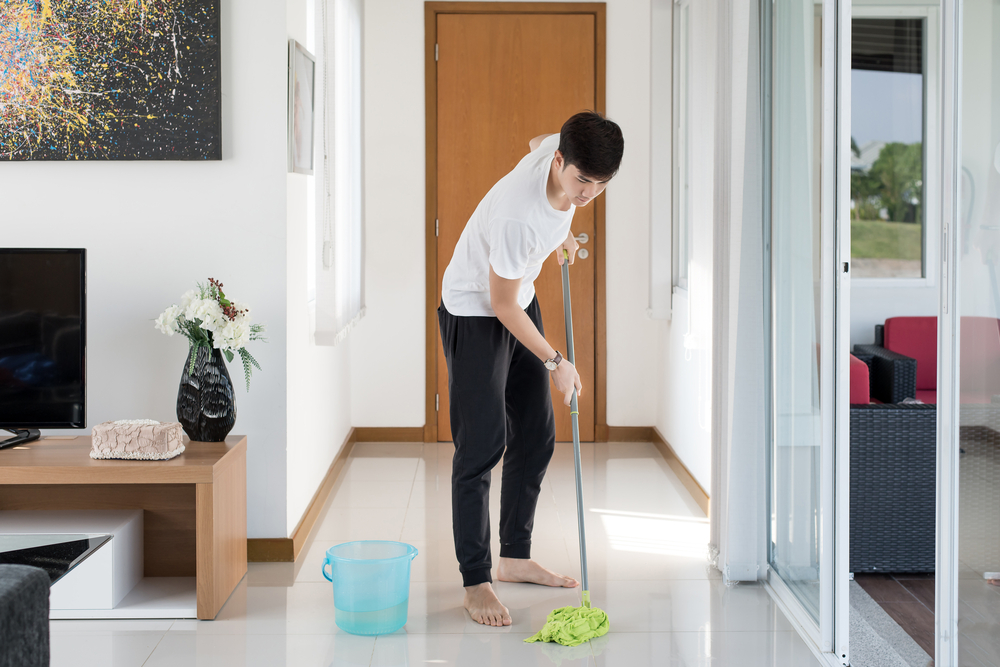
Tile floors are minimalistic, practical, and very easy to clean. They are ideal for humid rooms, such as the laundry, kitchen and bathrooms, and are made from a composite of clay and other natural materials.
Keep your tile floors looking premium with these tips:
Preventive measures
While tiles are really good when it comes to stains, they are still quite fragile, and can get scratched if a lot of dust accumulates in them. Because of this, it’s always a good idea to keep it your tile floors clean. Think vacuuming or sweeping with a soft-bristle broom.
Regular cleaning
If you take the preventive measures of vacuuming and sweeping regularly, cleaning shouldn’t be much of a chore. To remove the more typical stains, such as from food or drinks, mopping with bio-home Floor Cleaner will do the trick, however don’t use more than the amount recommended on the bottle as it may then leave a residue on the tiles.
The benefit of choosing bio-home Floor Cleaner over a conventional cleaner is that bio-home contains no bleach or harsh chemicals, which may cause discolouration in tiles.
Grout lines
One of the challenges that come with tile floors is cleaning grout lines. Because grout is usually white (a colour that gets dirty easily) and porous, it absorbs substances quite fast, such as grease, dirt and liquids – and they can be hard to remove.
To clean grout lines, use a toothbrush and a dense solution of bicarb soda and water. Apply it, brush it, leave it overnight, and remove it with a wet cloth. Your grouts should be looking brand new! You can also turn to silicone-based grout sealer to combat future stains.
Clean floors for a cleaner home

Increase the value and presentation of your house by looking after your floors. Just remember to take basic preventive measures, such as getting rid of dirt and dust, by sweeping or vacuuming regularly.
Looking for environmentally-friendly ways to keep your floors clean? Here at bio-home, we offer eco-sustainable cleaning solutions made from biodegradable and renewable plant-based active ingredients. You can buy bio-home products at a FairPrice, Sheng Siong, Prime Supermarket, Cold Storage or RedMart near you.
The post A Guide to Floors – Cleaning and Maintenance of All Flooring Types appeared first on bio-home by Lam Soon.
]]>The post The Ultimate Cleaning Checklist for Moving Into a New Home appeared first on bio-home by Lam Soon.
]]>If your home is to be renovated, it’s also best to do any measuring while the soft furnishings are not present. If your home is pre-renovated, it’s recommended that you do a spot-check for any defects or building errors that will need to be fixed before you move in. Here are recommendations on areas to check for defects.
Once this has been done, you’re ready to start cleaning – but where exactly do you start? Here’s a handy checklist of what you need to get yourself off to a great (and clean) start in your new home.
The best way to handle this cleaning job is to handle each room systematically, one by one. This not only ensures everything is done, but also the best way to organise your days preparing the home for you to live in. Otherwise, it’s very easy to forget which area you’ve cleaned and what still needs a wipe down.
The kitchen
Most people will start their cleaning in the kitchen. Not only is it often the most used room in the house, it’s also where most of the nasties tend to be and where you will prepare your food in the future, so ensuring this area is spotless is crucial for keeping your family healthy.
If you have bought a new condo in Singapore and all appliances have been provided, give them a thorough clean. This includes the fridge, stove, microwave and kitchen hood. If your home has been built to order (BTO), then appliances are not generally provided.
You’ll then need to tackle the kitchen cabinets and counters. Of course, the counters are pretty self-explanatory, but it’s wise to methodically go through each kitchen cabinet with some bio-home all-purpose cleaner and a sponge and wipe down all the surfaces. Don’t forget underneath the shelves as well.
Next, make a beeline for the sink. Grab a bio-home kitchen cleaner, spray the whole sink and let it sit for a little while before wiping it down.
Of course, don’t forget the floor. This may require you getting down on the floor yourself with a scrubbing brush and a bio-home floor cleaner.
And then, of course, there are also the little things. It’s important not to forget to clean the door handles and knobs, the taps, and run the dishwasher on a cleaning cycle to give it a freshen up.
The bathrooms
With bathrooms, you need to clean methodically by going around the room and making sure you cover all surfaces. Start with the sink. Give it a good clean and use anti-mould spray if you need to. If you prefer to use natural products, bio-home’s multi-surface cleaner is a great option for bathroom cleaning. Make sure you scrub the taps as well.
For shower screens, grab some newspaper and glass cleaner and scrub away. The newspaper works wonders to ensure there are no streaks on the glass. Alternatively, if it’s a shower curtain, it may be a good idea to purchase a new one to install.
And of course, no one likes the job, but it’s important to give your new toilet a good clean with bio-home multi surface cleaner. Also don’t forget to wipe down the flush button!
Bedrooms and living areas
Chances are that the bedrooms and living areas will just need a good sweep, mop and vacuum. If you’ve been told the previous owners had the floors cleaned prior to you moving in, still give the place a once over, as it provides that extra peace of mind and gives you an extra clean canvas for organising your furniture. If you don’t know whether the carpets have been properly cleaned, it may be worth hiring a professional. They’ll clean the floors thoroughly so there will be no nasties hanging around.
It’s also a good idea to dust any surfaces that are built in, remembering to do this from top to bottom so any dust that may fall will still get swept up as you move down. Also don’t forget to wipe down the ceiling fans and any air vents, as these places are prime locations for dust to settle.
A checklist of essentials
Of course, moving house is not just about making sure the place is clean. It’s also about making sure you have everything you need, especially for your first night sleeping there.
Here’s a checklist of things to have with you. A good idea is to pack the essentials into one or two boxes that you can simply open and unpack. That way, if those are the only boxes you get to have access to, you’ll still have everything you need.
Living
- Bed linen for all beds (kids and pets included)
- Baby supplies
- Towels
- Toothbrushes and toothpaste
- Toilet paper
- Pyjamas and a couple of spare outfits
Practical
- Toilet paper
- Toiletries
- Hand soap
- First aid kit and any medications
- Important documents
- Tools including a torch
- Scissors and maybe a few pens/pencils
- Chargers for phones and laptops
- Permanent marker
Kitchen
- Glasses
- Plates
- Paper towels
- Breakfast food
- Snacks
- Garbage bags
Cleaning
- Basic supplies – all-purpose cleaner, glass cleaner, floor cleaner
- Rubber gloves
- Broom
- Mop and bucket
- Sponges
- Toilet brushes
- Dust pan
Making sure your new home is clean from the start
There’s nothing like the feeling of moving into a new home, and giving your new house a good clean before you start to unpack is a great way to begin settling in. bio-home’s range of natural cleaners use natural ingredients to powerfully clean all surfaces, including the kitchen and floor. Using bio-home products for the first clean of your new home will get rid of any leftover harmful residue from chemical cleaners used in your home in the past, and keep your home smelling fresh and clean for your first days there.
The post The Ultimate Cleaning Checklist for Moving Into a New Home appeared first on bio-home by Lam Soon.
]]>The post 8 Popular Uses for Lemongrass appeared first on bio-home by Lam Soon.
]]>In terms of preparing lemongrass for its various uses, it is too tough to work with or eat without some preparation. It must be minced, finely sliced or infused as an oil.
Here are 8 popular uses for lemongrass.
1. Digestion
There are a huge range of medicinal uses for lemongrass, one of which is that it helps with digestion. Lemongrass contains antiseptic compounds that kill bad bacteria and parasites in the digestive tract. It also helps to repopulate the good bacteria in the colon. As a result, pain caused by digestive health problems such as indigestion, constipation, bloating, vomiting and cramps, can be alleviated.
This is best done by drinking lemongrass tea on a regular basis. Additionally, a couple of drops of essential oil massaged into the abdomen will help with indigestion.
2. Pain relief
Many essential oils can be used as pain relief. Lemongrass helps with headaches, stomach aches, muscular pain and can even help reduce a fever. Allergy-related headaches are especially receptive to lemongrass. While peppermint is generally recommended for such headaches, lemongrass is a fantastic alternative or complementary oil, especially for those who are allergic to the former. In terms of headaches, lemongrass is best administered by massaging diluted lemongrass oil onto the temples.
For aching muscles, lemongrass works wonders for spasms, backaches, sprains and cramps. Just rub some diluted oil onto the spot where the pain is. It works particularly well on spasms and cramps that come on suddenly, as it’s generally immediate relief.
3. Cleaning products
Making your own cleaning products is a great way to help the environment. Alternatively, there are environmentally-friendly cleaning products on the market that you can purchase. bio-home cleaning products all contain lemongrass because it’s a fantastic way to fight bacteria in your home. And as an added bonus, they smell delicious!
4. Bug repellant
The high acidity content of citrus, as well as evidence of the anti-malarial and anti-protozoan properties of lemongrass means it’s perfect as a natural insect repellant, especially against mosquitoes. In fact, it helps prevent diseases such as malaria, dengue and Lyme disease. What’s great is that the smell is quite mild, so you won’t mind having it on you all day, and because it’s natural, it’s fine to spray or rub on your skin. As an added bonus, it’s also a great repellant for your pet against fleas.
5. Detox
Used in several countries as a detoxifier, lemongrass works as a diuretic to help with the liver, kidneys, bladder and pancreas. It works by flushing out the harmful toxins in your body. Detoxing also helps lower the level of uric acid in your system which can help prevent infections such as gout and kidney disease. You can detox by drinking lemongrass tea or adding lemongrass oil to your soups.
6. Cholesterol
A study has found that lemongrass oil extract given to animals resulted in significantly lower levels of cholesterol. This has been supported by a study done in the late eighties, which found that people who took lemongrass capsules daily noticed a reduction in cholesterol levels. Consuming lemongrass oil has been found to reduce the bad cholesterol in the body and sustain healthy levels of triglycerides. Of course, this helps with helping the blood flow through the arteries, preventing cardiac disorders.
7. Hair health
Lemongrass oil has been found to strengthen hair follicles, helping with hair loss and irritated scalps. Simply massage some lemongrass oil into your scalp for a couple of minutes and then rinse. Alternatively, mix some through your shampoo.
The bacteria-killing properties of lemongrass also help to leave your hair silky and shiny.
8. Stress reduction and promotion of sleep
Because of its mild smell, lemongrass often helps with alleviating anxiety, irritability and insomnia. The herb also has sedative properties, so it can help with the duration and quality of sleep. The best way to use lemongrass as a stress reliever is via aromatherapy. Simply use a diffuser or pop some drops in your palm and inhale. Alternatively, to help with stress as you drift off to sleep, or to help the sleep process and combat insomnia, put some oil on your pillow or apply the oil to the bottom of your feet at night.
Ultimately lemongrass has many beneficial properties, so why not choose a plant-based cleaning product that uses these amazing properties such as bio-home?
The post 8 Popular Uses for Lemongrass appeared first on bio-home by Lam Soon.
]]>The post 11 Unexpected Tasks You Can Use Dishwashing Liquid For appeared first on bio-home by Lam Soon.
]]>1. It kills weeds
If your garden is full of weeds, it’s tempting to use a harsh chemical to kill them off. However, by using a natural plant killer, you can get rid of the weeds, while still being kind to the environment and also making sure that your herbs and veggies are okay for human consumption. Just mix half a teaspoon of dishwashing liquid with some cooking oil, top up with water, and pop it into a spray bottle. The key is spraying the weeds at the right time – during active growth, and on a dry and sunny day.
This tip was given to us by a happy bio-home customer – thanks for the feedback Kenneth!
2. Get rid of ants
Just mix one part water to one part vinegar and add a splash of dishwashing liquid. Ants can be exceptionally frustrating, indoors and out, but this mix is natural and easy on the environment, and all you have to do is spray the area and wait.
3. Clean your clothes
No no, you can’t put it in the washing machine. You’ll need bio-home laundry detergent for that. But you can get rid of grease stains on your clothes. They’re easy to get while cooking, and even easier to get when eating something. Simply rub a bit of dishwashing liquid on the stain and rinse with water. Just make sure you don’t use too much as it’s 5x more concentrated! Click here for a Complete Guide to all things laundry.
4. Make your jewellery sparkle
Want your diamonds to really shine? Mix a small bit of dishwashing liquid with some water and grab a toothbrush. If you really need to loosen the dirt, pop some carbonated water in instead. The bubbles will help release the dirt and really get into the nooks and crannies. Simply mix the ingredients in a bowl and pop the jewellery in. Let it soak for a few minutes, and then use the toothbrush to gently brush away any excess grime.
5. Clean your brushes
Hairbrushes and combs always seem to accumulate a lot of buildup from products and greasy hair. So much so, that they stop working to their full potential. If you can’t get that brush through those knots in your hair, mix a few drops of dishwashing liquid with some warm water. Rinse them in the solution and then leave them out to dry. The mixture of the dishwashing liquid and warm water will gently remove the hair buildup and grime.
6. Trap and kill pests
There’s nothing more beautiful than a vegetable or herb garden, lovingly tended to, to ensure your crops grow so you can nourish the family with home-grown food. However there’s nothing worse than those crops being overrun by pests. Mix up some oil and dishwashing liquid on a 1:1 ratio (1 teaspoon), combine it with 500ml of water and spray it over the plants. Don’t worry, it’s still okay for human consumption, and the oil sticks to the insects so they come off easily when you clean the leaves.
When it comes to fruit flies, leave out a bowl of vinegar with a few drops of dishwashing soap. The vinegar attracts the fruit flies and the dishwashing soap acts as a barrier so the flies sink.
7. Remove carpet stains
Dissolve one tablespoon of dishwashing liquid into two cups of warm water. Just blot the stain with a clean cloth that has been dipped into the solution. Keep blotting until the stain absorbs into the cloth. Then, sponge with cold water and blot to dry.
8. Clean the oil from concrete
Garage floors and driveways are key areas for oil buildup, simply because that’s generally where the car is. And often, it can be hard to get rid of these stains. Sprinkle some bi-carb soda on the stain and then pour some dishwashing liquid over it. Scrub with a brush and leave the solution to sit for a few hours. Rinse and repeat until the stain has gone.
9. Clean your filters
Air conditioning filters get used a lot. But how often are they really cleaned? If your unit is used routinely, it’s probably not enough. Fill the bath with warm water and dishwashing liquid. Then leave the filter to soak in the tub. Scrub it gently with a toothbrush, then rinse it completely and leave it to dry.
10. Add life to your locks
It fights grease on dishes, but did you know it also fights grease in hair? If your hair is looking a bit lifeless and greasy, just mix a dollop of dishwashing liquid into your shampoo.
11. Easily clean your blenders
Blenders, food processors, baby food mixers – they can all be hard to clean. But don’t worry about taking everything apart. Just fill the appliance halfway with warm water and dishwashing liquid and then run it for a few seconds. Empty the water and rinse it out, then leave it to air dry.
Getting the most out of your dishwashing liquid
Now you know to never underestimate your dishwashing liquid, as it can do so much more than simply just keep your dishes clean. bio-home dishwashing liquid can wash up to five times more plates than regular dishwashing liquid, and is also made from 100% plant-based actives, meaning it’s good for both your family and the environment… no matter what you’re using it for!
The post 11 Unexpected Tasks You Can Use Dishwashing Liquid For appeared first on bio-home by Lam Soon.
]]>The post What to Consider Before Choosing Your Cleaning Products appeared first on bio-home by Lam Soon.
]]>Perhaps the key question you have running through your brain is: are green cleaning products really worth is? Eco-friendly is a huge buzzword and sometimes, it can get overwhelming when you’re trying to clean your house while still trying to care for the environment.
What’s the difference?
The main difference between eco-products and regular products is in their ingredients. Regular household cleaning products rely on chemicals to effectively clean your home. While they get the job done, they’re not necessarily the safest option, nor are they the most environmentally friendly. In fact, at times they can pose health risks to you, your family and even your pets. Compare this to eco-friendly products that use plant-based surfactants and less invasive ingredients to clean and disinfect.
The other difference is how you use them. While the harsh chemicals in regular household items generally don’t require much scrubbing, eco-friendly products work just as well. As long as you have the proper cleaning tools, including a mop, scrub brushes and tile and grout brushes, environmentally friendly cleaners cut through stains and grease just as well as those laden with chemicals. It may also be worth purchasing a couple of extra toothbrushes to get to the ‘hard to reach’ places. Just remember to keep those toothbrushes far away from the ones you use to clean your teeth!
Green cleaning products: what’s the big deal?
Green cleaning is most definitely here to stay, as people are becoming more and more environmentally conscious, as well as conscious of their health. Natural disasters are happening left, right and centre, and a lot of people are putting this down to a change in the way we treat the earth. Right this change, and we may be able to preserve some of Mother Nature’s goodness. So, what are the advantages of using green cleaning products?
- Lessen your environmental impact: Using environmentally-friendly cleaning products not only helps with water pollution, but it also lessens air pollution and ozone depletion. It also promotes recycling (plus, many bottles are actually made from recycled materials), which means less products going to landfill and less disposal of toxic products.
- Healthier surroundings: Think about what you’re inhaling when you’re cleaning the house. Would you want to be inhaling chemicals and harsh toxins, or would you prefer to inhale essential oils and natural scents? Toxins in regular cleaning products can wreak havoc on your health, from your eyes to your skin and everything in between. At its worst, it may cause chemical poisoning.
- Save money: Yes, you may think that green cleaning products would cost more, but in actual fact, it’s the opposite. Often, green cleaning products are actually much more affordable than the regular options in terms of the price you pay to get better ingredients.
What products are best?
bio-home’s products are available for every situation you’d use regular chemical cleaning products in. Whether it’s your dishwashing detergent, tablets or liquid, washing powder or fabric softener, floor cleaner or multipurpose cleaner, there are loads of options.
- Dishwashing liquid that washes up to five times more plates than regular liquid, and is biodegradable. It’s also dermatologically tested so it’s gentle on your hands, and smells great!
- Our kitchen cleaner is made from non-toxic 100% plant-based ingredients, and is rinse-free so you don’t have to wipe down the surface again. It works on light stains with a simple wipe, and tougher stains by simply leaving the spray on for an extra 30 seconds.
- A floor cleaner that does the job and is totally baby-safe. With children around, you want to know that they can crawl, run, jump and play with toys from the floor without ingesting the chemicals used to clean. It’s quick drying and can be used on most surfaces, including marble and parquet.
- Multi-surface cleaner that is just that; a cleaner that can be used on any surface, from wood to veneer.
- Laundry detergent for both normal skin and delicate skin. While both can be used for the whole family, if you have sensitive skin, the Delicate Laundry detergent option is available. Both are available in a hyacinth and nectarine scent, and can be used in a front-loader or top-loader washing machine. To find out more about the best ways to utilise your laundry, check out our Complete Laundry Guide here.
Keeping your home fresh, clean, and green with bio-home
In the end, there really is no reason NOT to purchase green cleaning products over the traditional ones. bio-home’s products are not only free from the toxic chemicals that can damage the health of both you and your family. They’re also better for every aspect of the environment, whether this be the water, the air or the land, and they’ll leave your home feeling fresher and cleaner than ever before. Browse our range of plant-based cleaners today, and make the switch.
The post What to Consider Before Choosing Your Cleaning Products appeared first on bio-home by Lam Soon.
]]>The post What Your Mum Really Wants This Mother’s Day appeared first on bio-home by Lam Soon.
]]>If your mum is adamant that she doesn’t need anything, choosing a gift can be even harder. Actions will always speak louder than words, but that doesn’t mean that you should forgo a physical gift. After all, everyone loves opening up presents! But what does your mum really want? And how can you make the day all about her?
Here are seven of the best ways you can treat your mum this Mother’s Day:
Breakfast in bed
If you don’t live with your mum anymore this could be tricky, but that doesn’t mean you can’t take her out for a luxurious breakfast instead. Either make your mum’s favourite breakfast (think red velvet pancakes or bacon and eggs), or take her out for a special brunch at her favourite café. And a morning mimosa never goes astray, whether it be out-and-about or snuggled up in bed.
Spa Day
Mums deserve to be pampered, so why not organise a spa day to celebrate her? You can buy a massage or spa voucher through Groupon for her to use at her leisure, or you can buy a voucher for two and book it for Mother’s Day. Make sure to keep in mind what your mum would prefer, whether it be relaxing by herself, or being pampered with her kids. Because remember, the day is all about her (and not about how much you need a pedicure).
Or, arrange a spa day for her at home! Set up a foot soak, buy some sheet masks, light some candles, pull out her favourite nail colour, and then treat her to a manicure and pedicure in the comfort of her own home.
Clean for her
Although you may be tempted to buy cleaning products for your mum (we get it, they are useful!), your mum shouldn’t have to think about cleaning on Mother’s Day! Instead, put on your cleaning gloves and get cleaning! Mop the floors, wipe down the kitchen benches or any other surfaces that need a quick wipe, and while you’re in the kitchen you may as well do the washing up. Your mum will not only love the effort you have gone through, but she’ll love the smell of natural lemongrass and green tea wafting through her house while she sits back and relaxes.
Jewellery
Diamonds may be a girl’s best friend, but you don’t have to splurge on them for your mum this Mother’s Day. For her, it’s not about the price, but the thought behind it. So, opt for something personalised. Whether it be a beaded bracelet crafted with love, or a necklace with a personalised message, give her something she can cherish that is uniquely hers!
A heartfelt card
Every mum deserves a card, whether it be alongside a voucher or a gift, so make it the best card you can. Whether you buy a classic Hallmark card or are stepping up to your craft table and making a card from scratch, it’s what is on the inside that counts. Tell your mum how much you appreciate her and what you love about her. And a funny family anecdote never goes astray!
Make sure to have each member of the family write a separate message to her rather than just one generic one. Make this year’s Mother’s Day card one that your mum will be reading for years to come.
Flowers
Flowers are a classic gift for a reason. Not only do they bring lush colour and fragrance, but they instantly lift any room and the spirits of everyone in it. Every mum has their favourite flower, so be sure to pick up a bunch of those. Paired with a box of chocolate, you’ll have your mum grinning from ear-to-ear.
Make the day all about her
At the top of every mother’s wish list is something quite simple: quality time with her family. Sure, you could buy her an extravagant perfume or a Tiffany & Co. bracelet, but family time will always be the cherry on top. Whether you live away from your mum or still enjoy her cooking every night, making that extra effort to spend the whole day with her will not be forgotten or underappreciated.
What are her favourite things to do? Does she have a favourite restaurant you can take her to? Are there any daytrips you could take as a family? Whether you spend the day indoors watching her favourite films, or hitting up all of your mum’s favourite locations, as long as there’s a wide grin on your mum’s face, that’s all that matters.
So, no matter what gift you choose, give your mum all the attention she deserves on this special day and it will be a day she cherishes for years to come.
The post What Your Mum Really Wants This Mother’s Day appeared first on bio-home by Lam Soon.
]]>The post Does laundry detergent contribute to acne? appeared first on bio-home by Lam Soon.
]]>Unless we have sensitive skin, we often do not pay attention to the laundry detergent that we use. Most people grab something accessible and affordable off the shelves, without considering the quality and ingredients of the detergent. However, we should realise that the residue of our laundry detergent adheres to our clothes, our towels, our bedsheets and many other fabrics which come in contact with our skin every day. Hence, there is a high chance that the redness and inflammation of acne is contributed by the laundry detergent that we use.
If you are prone to acne, do check out hypoallergenic laundry detergents such as bio-home’s Laundry Detergent. It is free of harsh chemicals, restores our skin’s natural moisture barrier with its pH-neutral formula and biodegradable, 100% plant-based active ingredients. It is also available in phthalates-free fragrance – hyacinth and nectarine, to minimise redness and inflammation on acne-erupted skin.
Don’t forget to allow yourself sufficient time to observe significant improvements in your skin’s condition. It may take up to a couple of weeks for that, but start taking the necessary steps to keep acne at bay!
To discover some interesting facts about bio-home’s laundry detergent, click here.
The post Does laundry detergent contribute to acne? appeared first on bio-home by Lam Soon.
]]>