The post Areas You May Miss When Cleaning the Floor appeared first on bio-home by Lam Soon.
]]>When it comes to cleaning floors, just because you can’t see it doesn’t mean it’s not there! Find out the most common areas we miss when cleaning the floors.
Under the refrigerator
Even if we keep our fridge clean on the outside and inside, there’s a chance we forget about the space underneath. Cleaning the floors under the fridge is often tedious, as it’s only a small space – making it hard to glide a broom or vacuum cleaner under. But it is important to clean under the fridge at least once a year to prolong the fridge lifespan and remove any dirt and dust buildup. When dust builds-up on the floor, it causes a sticky gummy residue under the fridge which can lead to staining and built-in gunk. The easiest way to clean under the fridge is by moving it. To do this, remove any frozen goods or products that can spoil and pack them in an icebox. Turn off the fridge and use cardboard on the surrounding floor to prevent scuffing as you move the unit. Use bio-home Floor Cleaner mixed with hot water and scrub the affected surface.
Under the couch
It’s always astonishing how much dust – and food! – accumulates underneath sofas. It’s an area often overlooked when cleaning. But it’s an important space to clean, particularly if your family is like many others who eat, drink, and spend a lot of time in the living room. Bulky furniture is often a good cover for cobwebs which can lead to spiders or other creepy crawlies hiding at this area. Moving your sofas and giving the floors a sweep and mop is a small price to pay for keeping your home clean.
Along skirting boards
Most homes feature skirting boards covering the lowest part of the interior walls. Often, the joint between the board and the floor can be a trap for dirt and dust. While it may seem like a minor area hardly worth the effort to clean, it makes a huge difference to the appearance of your floors. Not only that, dust and cobwebs tend to gather in these areas along with any foodstuffs that may have been pushed into the joint from previous cleans. A simple way to clean the floors along skirting boards is by using a microfiber cloth to pick up loose dust and then getting rid of any grime by gently rubbing with a mop or cloth soaked in surface cleaner.
Behind doors and cupboards
Another commonly missed area when cleaning floors is the space behind doors and cupboards. When cleaning, make sure you open doors to clean the space in front, and then close the door to cover the areas missed. Pay particular attention to walk-in pantries or floor to ceiling cupboards, where food can get stuck between the small space and floor. Usually, a quick dusting will do the trick. For any dirt, grime, or sticky residue, using the bio-home Multi-Surface Cleaner to spot clean will get those floors spick and span again.
High traffic areas
Areas within the house that attracts a lot of foot traffic tend to be the most mess prone. These areas include the kitchen, living room, dining room, and front entranceway. Think about the space under the dining room table where food bits remain unnoticed. At entrance ways, clean the space underneath your welcome mats when cleaning the floor. This is also an overlooked area yet it is one spot that holds a lot of dirt from people walking into the house after a whole day outdoors. Large pieces of furniture such as standalone mirrors, beds and bedside tables also provide a great cover for dirt, dust and mould. These pieces of furniture are rarely moved once placed in the house, yet are breeding grounds for dust balls, cobwebs, and missing toys or remotes!
Keep floor surfaces clean effectively
Keeping floors clean and dirt-free helps to maintain a polished and healthy home. Even if the rest of the house is clean, when the floors are dirty it makes the entire house appear dirty, too! A fast and easy way to clean the floor is by using bio-home Natural Floor Cleaner. The 100% plant-based active ingredients provide a deep & thorough clean, without being harsh on surfaces or skin. This makes cleaning the house fuss-free and eco-friendly. A better choice for you and your family.
The post Areas You May Miss When Cleaning the Floor appeared first on bio-home by Lam Soon.
]]>The post How To Keep Floors Looking Clean When You Have Kids appeared first on bio-home by Lam Soon.
]]>The exercise of cleaning floors not only keeps your home fresh but also keeps the health of your children in check. You want your kids to move around on surfaces that are clean and toxic-free.
With that in mind, here are some helpful tips to tackling sticky, smelly or grubby messes left on floors by children. With the right tools and products, you can have your surfaces looking clean again in no time.
Stop dirt from entering the house
Most of the dirt, mud, and grass that ends up in your house usually comes from shoes being walked inside. One of the easiest ways to stop this dirt entering the house is by getting your kids to take off their shoes before entering.
Another easy hack to keeping dirt from being walked-in is by placing a doormat at the main entrance. That way, kids and visitors can give their shoes a wipe on the mat before entering, minimizing dirty floors. Doormats are also a good way to minimize slip hazards.
Limit food to certain areas
If you’re tired of picking up half-eaten snacks or stuck-in foods from the floor, try limiting snacking to designated zones. Kids are known to walk around the house while snacking, leaving a trail of crumbs behind. To stop food crumbs, drink spills, and sticky messes from spreading, have kids consume food and drinks at the dining table. For special treats or snacks throughout the day, encourage them to eat outside.
Clean high-traffic areas
If you’re time-poor and can’t do a clean of all the surfaces in your home, then stick to cleaning floors in high-traffic areas. Places like the kitchen, dining room and living room tend to accumulate the most floor mess. Sticking to these areas during your daily clean keeps these surface areas safe and mess-free and can give the appearance of an overall clean home. You can then do a deep clean of the rest of your surfaces once or twice a week.
Spot clean daily
After meal times, do a quick sweep of the dining area for any messes that need cleaning. Spot cleaning daily means you don’t have to deep clean as often. It’s also a great way to take care of messes before they end up staining surfaces and require extra scrubbing. One swift scan of the room can save that rogue blueberry from getting squashed into carpets or muddy shoes creating stains on hardwood floors. Whenever these messes do occur, act on it immediately by wiping clean with bio-home Floor Cleaner.
Sweep and mop floors
Sweeping hard floors and mopping surfaces will prevent any dirt from causing scratches and will keep your floors lasting longer. Kids can be notorious for accidental spills. This can lead to unwanted and unpleasant smells. If you have a baby, mopping up under their high chair after every meal can collect any dropped food or liquids that may have gone unnoticed. For mopping of high traffic areas, it’s best to do it when the kids are at school or when they are sleeping. Wet surfaces can be a slip hazard, especially for little ones but bio-home Floor Cleaner has a quick-dry benefit. Made from 100% plant-based active ingredients, bio-home Floor Cleaner will give you a peace of mind when your kids crawl and play on the floor.
Teach your toddler to help
Another great way to enlist extra help and spend more bonding time with the kids is to have them help you clean! Teaching your toddler to clean up after themselves or having them join you in sweeping or mopping floors can be a fun exercise in responsibility. Little prompts such as teaching your child to put away toys after play can keep your floors tidy and hazard-free.
Keep your floors clean, naturally
Keeping your floors clean when you have kids is essential for their wellbeing. Not only does a clean floor keep your house looking fresh but it also makes it a safe area for your kids to play in. Using a non-toxic floor cleaner like bio-home Floor Cleaner effectively cleans your floors while being baby-safe. The 100% plant-based active ingredients won’t irritate skin and can be used on all floor surfaces for a happy and healthy home.
The post How To Keep Floors Looking Clean When You Have Kids appeared first on bio-home by Lam Soon.
]]>The post The many uses of dishwashing liquid appeared first on bio-home by Lam Soon.
]]>Discover the multiple uses of the dishwashing liquid, which can lend so much more help around the house than you think.
Clean outdoor furniture
A dishwashing liquid functions well on countertops, window sills and other types of surfaces like glass and plastic. Add a small bit of the liquid to a spray bottle filled with warm water, to cleanse away the dirt and grime. Next, wipe over the soapy surface with a well-wrung cloth and allow the surface to dry naturally.
This concoction works very well on outdoor furniture or patio furniture that has been exposed to outdoor dirt and dust. The dishwashing liquid will effectively de-grime any built-in dirt or sticky buildup.
Degreasing kitchen appliances
Appliances in the kitchen require regular cleaning, as they are subject to the build-up of sticky grease and stains from cooking. Appliances such as ovens, toasters, blenders, refrigerators and griddles will benefit from the mild and friendly cleansing power of the dishwashing liquid.
Stainless steel cleaners can be very expensive (and harsh if it comes into contact with skin) so using a gentle dishwashing liquid mixed with warm water will polish off stains, fingerprints, and marks leaving your stainless steel appliances sparkling.
An effective stain buster
Oil-based stains are the hardest to remove, often leaving behind a dark stain or cause discolouration even after soaking. However, dishwashing liquid that is specifically catered to remove grease may work even better than conventional laundry detergents. In fact, dishwashing liquid is especially effective at removing food-based oils, making it a great spot treatment for stained table cloths or couch fabrics.
Dishwashing liquid also tends to be gentle enough on delicate fabrics like silk and wool, which could be easily damaged by laundry detergent due to its more potent chemical composition. The method to go about this is to dissolve around 1 tablespoon of the dishwashing liquid into 2-3 cups of lukewarm water, and carefully dab on the stain with a clean cloth dipped into the mixture. Repeat this until the stain starts to disappear.
Cleaning hairbrushes and combs
Combat residue from hair grooming products like hair wax and mousse with a light solution of a few drops of dishwashing liquid combined with warm water. You can also use dishwashing liquid as a shampoo. For those dealing with greasy tresses, simply apply a coin-sized amount of dishwashing liquid to your hair, lather, then finish by washing with your regular shampoo.
Polishing jewellery back to its original shine
Our jewellery collects dirt with frequent wearing, resulting in dull or cloudy looking accessories. For an easy at-home way to polish jewellery and get it back to its original shine, mix a tiny portion of dishwashing liquid with water and soak the jewellery for 5-10 minutes. If necessary, use a toothbrush to scrub out any stubborn stains.
Get rid of fruit flies
Fruit flies are attracted to fresh fruit, making them frequent pests in the kitchen. To cut these pesky flies from their food source and protect your family’s food and health, add 3 drops of dishwashing liquid to a bowl of vinegar and place out on the kitchen counter. Fruit flies will become trapped and drown in this solution, preventing any more flies from breeding and attacking your fruit.
Prevent glasses from fogging
Cleaning foggy glasses or sunglasses can be a challenge. Using dishwashing liquid can help to remove any fingerprints, film and vapour leaving your glasses clear to see through.
Rub a drop of dishwashing liquid on the lenses then wipe with a soft cloth without rinsing. The film from the liquid will prevent fog from appearing.
Clean your wheels
Brake dust and caked-in dirt can be a real challenge to remove from car wheels. However, a mixture of warm water and dishwashing liquid can be applied to remove this dirt easily. Simply scrub away with a scour brush.
Make a flexible gel ice pack
A flexible gel ice pack should be in everyone’s freezer to treat aches and sprains when needed. To make your own flexible gel ice pack, mix a cup of dishwashing liquid with 30ml of rubbing alcohol. Pour the mixture into a ziplock bag and freeze.
Silence squeaky doors
Squeaky doors can be a nuisance. Before you reach for that grease, try using dishwashing liquid to lubricate door hinges.
Clean air conditioner filters
Filters can trap a lot of dust, potentially filling your home with pollutants when you turn your air conditioning unit on. To clean air conditioning filters, soak them in warm water mixed with dishwashing liquid and gently scrub with a toothbrush before rinsing dry.
Use an eco-friendly dishwashing liquid
There always seems to be a need for specialty cleaning products, but most jobs can be tackled with just one simple product. Try bio-home Dishwash Liquid – it is 5 times stronger than the average dishwashing liquid, successfully removing tough stains and yet, is gentle on our skin and the environment. Let’s do this the economical and eco-friendly way!
The post The many uses of dishwashing liquid appeared first on bio-home by Lam Soon.
]]>The post 7 Cleaning Hacks to Prepare Your Home for Chinese New Year appeared first on bio-home by Lam Soon.
]]>Besides the red envelopes and parades, the house-cleaning ritual, known as dà sǎo chú is one of the biggest Chinese New Year traditions. It starts on the days preceding Chinese New Year celebrations, between the 23rd and 29th of the lunar month.
Whether you’re entertaining the family at home or visiting family elsewhere, preparing the home to be clean come the New Year is hugely important. In Chinese New Year tradition it’s bad luck to enter the New Year with dirt in the house.
There’s a saying in Cantonese that means “wash away the dirt on Ninyabaat.” (Ninyabaat is the 28th day of the 12th month.) It’s believed that thoroughly cleaning your home rids it of the bad luck of the past year and gets it ready to fill with the good luck sure to follow in the new one. Every nook and cranny should be scrubbed down and any broken furnishings, crockery or appliances discarded.
Getting ready for Chinese New Year? Start with a clean.
Hacks for cleaning your home in time for New Year
To stay organised in the lead up to Chinese New Year, make a list of what needs doing. This will ensure you don’t miss anything – tradition states that everything must be cleaned. Making a list is especially helpful if you are entertaining the family this New Year, as you’ll have a million and one other things to think about too.
Rooms should be swept from the entrance to the centre, with rubbish going out the back door. (The front door is where the good luck comes in).
When cleaning your home, consider eco-conscious cleaning products that won’t harm the environment or your family. The bio-home cleaning and washing range is 100% plant-based and strong enough to ensure cleanliness around the home.
Also try to repurpose things in your home to make the job of cleaning simpler and more effective. The easier the job is the more you can concentrate on the fun parts of Chinese New Year like enjoying a reunion dinner, giving and receiving Ang Baos, and visiting relatives and friends’ homes.
Try these 7 DIY hacks for…
Dust bunnies: DIY a cleaning wand using a stocking wrapped around a broomstick or hanger. Nylon attracts dust particles with static and this simple-to-make device will help you reach the toughest nooks and crannies as well as the ceiling.
Lacquered surfaces: To restore luster to wooden, marble and lacquered surfaces, try using bio-home Multi-Surface Cleaner, which is suitable for all hard surfaces, including cabinets, tiles, furniture, window frames and appliances. Cleaning doesn’t get much simpler than a quick spray and wipe.
Floors: For floor surfaces, including marble and parquet, use our bio-home Floor Cleaner. It’s 100% plant-based and free of harsh chemicals it will have your floors looking clean and smelling lovely.
Microwave: Orange peel is an amazing natural tool for cutting through grease and food odours and after a year of usage, your microwave could do with a blast of orange oils. Peel a couple of oranges, pop the rinds in the microwave with some water, and heat for 60 seconds. Remove the rinds and wipe down with a clean cloth.
For the outside of your microwave and other kitchen areas, use our non-toxic, biodegradable Kitchen Cleaner, which will bring home the fragrance of nature.
Stubborn grease stains: If you’ve got a grease stain you simply can’t get rid of through scrubbing, heat it with a hairdryer. Give the stain a really good blast of our Multi-Surface Cleaner and then cover the stain in cling wrap. Blow dry on high for two minutes and the heat will oxidise and break down the stain. Remove the plastic, give it a wipe and viola!
Washing machine: A washing machine’s main duty is to clean but that’s not to say that it doesn’t get dirty. Now is the perfect time to give your washing machine a good clean with a small amount of white, distilled vinegar. Run the cycle for 10-20 minutes to get rid of mold and germs.
Leather furniture: Add a small amount of olive oil to a cup. Dip a hand towel and wipe down your leather furniture. This can help add wonderful shine to the leather and helps to protect it. Wipe any excess oil away with some paper towel.
Keeping in the good luck
All the hard work done before Chinese New Year! No more cleaning on Dà nián chū yī (1st day of CNY) and keep the good fortunes coming in!
Cleaning might be a big part of getting ready for Chinese New Year but it’s not to be performed in the days that follow. Chinese tradition suggests you should refrain from sweeping again for a few days after New Year, so as not to sweep away the good luck.
So get busy now, knowing you can relax soon enough. Happy New Year!
Before you get ready for your big clean, visit our website and learn everything you need for a sweet-smelling, fresh, clean and environmentally-safe home.
The post 7 Cleaning Hacks to Prepare Your Home for Chinese New Year appeared first on bio-home by Lam Soon.
]]>The post Hand-Washing Dishes? Secrets to Save You Time (And Water) At The Sink appeared first on bio-home by Lam Soon.
]]>Ready to get started? Here are some secrets to save you time (and water) at the sink!
1. Use less water when washing dishes
A study into dishwashing found that on average, washing dishes by hand used about 103 litres of water. How you wash dishes can make all the difference in reducing water waste and cleaning efficiently. Instead of rinsing dishes, use a wooden spoon to scrape excess food waste from plates and bowls into a bin or compost. Save water by soaking a dirty dish in a small amount of soapy water to start getting cooked-in food stains out. Not only is this time-consuming but it leads to water waste. Using an eco-friendly dishwashing liquid with a concentrated formula means one pump can wash five times more than a normal dishwashing liquid. For really stubborn cooked-on food stains, sprinkle baking soda on the stain and lightly scrub the area before washing.
2. Use your dishcloths wisely
One way to get a more effective clean is by using a sponge. Sponges tend to hold in that soapy dishwater, meaning you can go through more dishes without having to reload the sink with more soap or water. Another eco-friendly and efficient hack to wash dishes includes turning your mesh produce bags into DIY scouring pads.
3. Leave a tub of soapy water next to the sink
This is a great idea if you are using a sponge to wash dishes. Fill an old ice-cream container or bowl with water and your non-toxic dishwashing liquid and dip the sponge into the solution then proceed to clean your dishes. You can save water this way since you’re not filling a whole sink up with water. You can also leave this bowl of soapy solution next to your sink during a dinner party or even for a few days and drop dirty utensils into it as a quick and eco-friendly pre-rinse hack.
4. Don’t wash dishes that only require a wipe-down
Just because you used something doesn’t mean it needs to be washed. For example, many of us use measuring cups or spoons to divide dry ingredients like flour or pecans when baking. Most of the time we rinse these cups off and proceed to wash them with the rest of our dirty dishes. But, if there isn’t any sticky residue, then you can just wipe them out using a paper towel instead.
5. Wash stove pots with this one-pot cleaning hack
We all know how cumbersome and time-consuming it is to clean pots and pans. Most of the time, we prepare another load of soapy water to tackle these dishes. Cut this washing time and your water use by putting your pot back on the stove with some water and baking soda or eco-friendly dish liquid, turn on the heat, and let your pot self-clean!
6. Use chopsticks to dry glasses
Free up room in your dish rack by drying glasses on chopsticks. Simply lay out a towel and line up some chopsticks so that they are parallel to each other and sit your glasses upside-down on top of them to drip dry. This is also an easy way to create more dish drying space so that you don’t have to wait for previous dishes to dry before starting another load.
Go green for a more efficient clean
Prolonged exposure to chemical-laden cleaning products such as dishwashing liquid can contribute to long-term health risks. These toxic products also negatively affect the environment. Think of all that chemical-filled water being flushed down the drain after every wash. This water ends up in lakes, reservoirs, rivers and oceans – potentially leading to a severe multiplication of algae. A non-toxic dishwashing liquid like bio-home Dishwashing Liquid is not only gentler on the skin, but on the earth too.
The environment needs our protection and care now more than ever. Many of us don’t realize that a seemingly harmless task like washing the dishes can be harmful to the environment. Say no to toxic cleaning products by switching to eco-friendly cleaning products such as bio-home Dishwashing Liquid.
The post Hand-Washing Dishes? Secrets to Save You Time (And Water) At The Sink appeared first on bio-home by Lam Soon.
]]>The post How to Clean Your House in a Day appeared first on bio-home by Lam Soon.
]]>Declutter
Clearing clutter around the house may seem like a no-brainer but it will make a big difference. Not only will it give you a chance to get rid of any junk or items that no longer serve you, but it will also make cleaning easier. Focus your attention on areas such as the bathroom cupboards or the kitchen pantry. Take a large garbage bag and clear out all expired products such as toiletries, food items and canned goods that have remained untouched for the last couple of years.
Use a DIY washing solution as a multi-purpose cleaner
How many of us keep a cupboard full of cleaning products that target different areas of the house? Cut back on your chemical cleaners and make cleaning the house easier by using an all-natural multi-surface cleaner that can be used on everything from cabinets, furniture, window frames and even wall tiles.
Deal with food waste
The holiday season can result in a lot of waste, in particular, food waste. According to the National Environment Agency (NEA), food waste accounts for half of the total waste disposed of by households. Get on top of your food waste management by dealing with leftovers promptly. Use transparent containers so that you can quickly and easily identify their contents. The best way to ensure leftovers don’t go to waste is by labelling containers with the contents and date and to store those foods which need to be consumed earlier toward the front of the fridge. If you have leftovers from a family roast, you can use every part of the meat and vegetables to make a stock or nutritious broth.
Keep the kitchen clean
With all the cooking and food preparation the holidays bring, our kitchens can be at risk of becoming messy and unhygienic. Keep your kitchen looking and smelling fresh by using your kitchen cleaner to wipe out the fridge including the exterior. This will get rid of any grubby handprints and leftover food which may have accumulated after the holiday season. Once cleaned, leave an opened packet of baking soda in the fridge to clear out any smells.
Make taps and faucets shine
Have any lemons in the fruit basket? Use this versatile citrus fruit to help clean stainless steel fixtures, making them shine like new! Simply cut your lemon in half and rub directly on your taps, sinks, and steel appliances. You may also mix lemon juice with water in a bowl and use a cloth to wipe over these areas and then use a paper towel to dry.
Try this simple toilet hack to maintain pipes & plumbing
You most likely have a roll of aluminium foil in your kitchen cupboard. Aside from covering food, did you know you can also use it to clean the plumbing? Rusty pipes can be repaired and maintained by simply dipping a strip of aluminium foil in water and rubbing it on the affected spots or wherever you see rust. Use on your toilet, shower or sinks to remove rust and erosion with ease!
Deal with stubborn stove stains
Stubborn stove stains from food and liquid substances are unsightly and often a pain to get rid of. Save time and effort by gathering a stain-fighting kit of salt, baking soda and vinegar. Sprinkle baking soda on the stain and scrub with a soft brush before wiping off. Repeat with some salt. For stubborn oven stains use a homemade cleaning solution consisting of baking soda, salt and vinegar forming a paste to apply to the stain. Let sit before scraping with a wooden spoon.
Clean your home, naturally
Bio-home Multi-Surface Cleaner is a general all-purpose cleaning solution that’s perfect for all your daily cleaning needs. It covers all areas of the house – making it a versatile cleaning companion. For more specific cleaning tasks, our Kitchen Cleaner and Floor Cleaner can be added to your arsenal of cleaning products to make sure your home stays fresh and clean.
The post How to Clean Your House in a Day appeared first on bio-home by Lam Soon.
]]>The post Speed Cleaning Hacks That Will Make Your Floors Clean In No Time appeared first on bio-home by Lam Soon.
]]>How to quickly clean floors
The floors of a house often require more frequent attention since they attract a lot of foot traffic. From outdoor shoes to dirty paw prints and accumulating dust, a dirty floor is not only unsightly but it can also be unhealthy. If you have young children, they are at risk of coming into contact with hair and debris as they play or crawl along unclean floors.
Unfortunately, cleaning the floors can become tiresome and time-consuming. The trick to cleaning floors quickly, while still giving a proper clean to get rid of all allergens, is to be prepared.
Here are some fast and efficient ways to clean the floors of your home:
- Clear away objects – By putting all objects out of the way, you’re able to zoom through with your vacuum or broom without having to reshuffle or move things as you’re going along.
- Keep a broom and dustpan handy – Having a broom and a dustpan in a central spot such as your kitchen will make it easier to grab as you need it.
- Have a routine – Routine cleaning (daily, weekly or fortnightly) makes it easier to keep floors clean in the long run, by lessening the need for you to use more heavy-duty cleaning. Create a schedule for sweeping, mopping and vacuuming.
Fun ways to time yourself and make cleaning fun
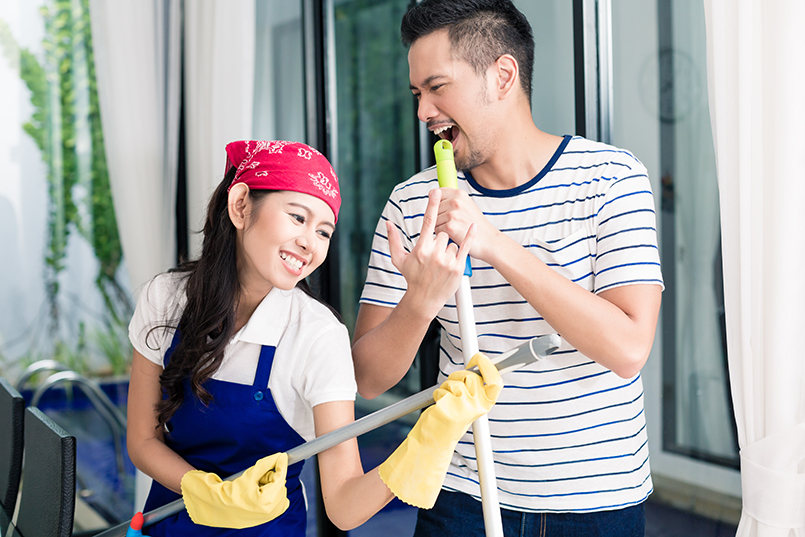
Make cleaning fun by taking away the drudgery and replacing it with a few techniques to ignite joy and spark some motivation. Here are just a few fun ways to time yourself as you clean and to make cleaning the floors a joyful experience instead of a dreadful one.
1. Play music
We’re lucky to live in an age of technology, especially when it comes to the housecleaning! With Bluetooth, home assistance gadgets and smart TVs, you can easily turn up the entertainment factor when it’s time for your daily clean. Music is an incredible motivator and can help you to feel more energetic!
Make use of it by making your own cleaning playlist on your phone or home entertainment system and put it on when it’s time to clean! Fill it up with all your favourite songs and dance away as you mop and sweep!
2. Time yourself
You’ll be less likely to drag your feet when you’re racing against the stopwatch! Timing yourself can be a good way to break up the drudgery as you clean and can actually help to spur you on and you may even find yourself competing to beat your personal time with each session. So set the egg timer when you do your chores!
3. Distract yourself
You can also play your favourite movie on the TV to glance at as you clean or, if you’re great at multi-skilling, you can even phone up a friend for a good chat. Put them on the loudspeaker and go about your business – you’ll be surprised at how quickly time seems to fly even when you’re cleaning!
4. Make it your workout
Did you know cleaning burns calories? As you clean, you’re keeping your strength and aerobic fitness up by keeping on your feet, lifting objects and pushing vacuums and mops. Consider wearing a heart or fitness tracker to see how many calories you burn or the average steps you take. Then the next time you clean, you can try and break your previous record.
Tools & products needed to clean the floors
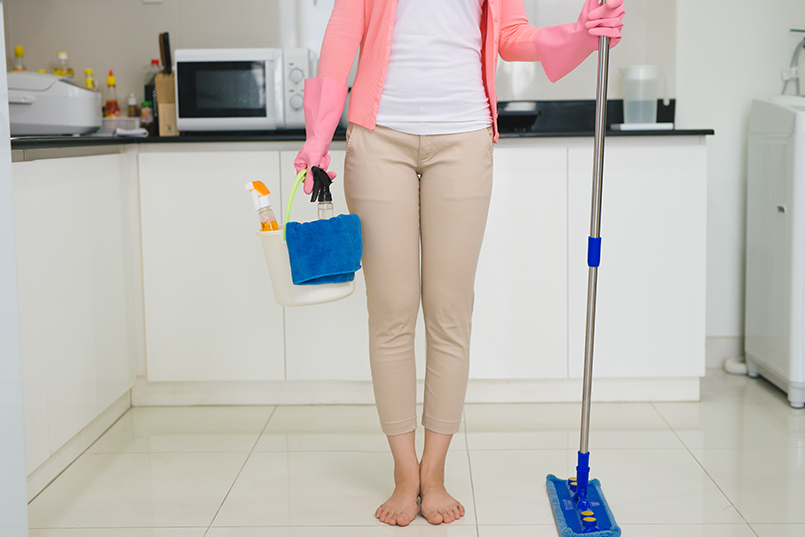 The speed of your clean is largely dependent on the ease and effectiveness of the tools you use. That dirty old sponge may have served you well, but it isn’t going to aid in a quick clean. Instead, consider some of these tools and products to halve your cleaning time and make it more enjoyable.
Use the right floor cleaner
Using a quality floor cleaner is one of the most effective ways to ensure a quick and easy clean. For the sake of your family’s health, make sure that you use a non-toxic floor cleaner such as bio-home’s floor cleaner.
Sweep regularly
Keep your floors fresh in-between cleans by sweeping regularly with a proper indoor broom. Sweep at least once a week to remove any dust and loose dirt. If you choose to, it is a good idea to briefly sweep the floor after use. This is a proven way to help keep your flooring at it’s best shape and this simple tool can save you from having to vacuum too regularly.
Keeping your home naturally fresh with bio-home
These are just some of the ways you can make cleaning floors fun and fast. Instead of approaching cleaning as a chore, try and find creative ways to make it an enjoyable task. Using the correct tools and products also ensures that your floors remain sparkling and smelling fresh in-between cleans while keeping the entire family safe.
Take care of your health and your home by using a natural, PH-balanced cleaner like the bio-home floor cleaner on your home’s surfaces makes cleaning floors easy.
The post Speed Cleaning Hacks That Will Make Your Floors Clean In No Time appeared first on bio-home by Lam Soon.
]]>The post How to Keep Your Floors Clean When You Have Pets appeared first on bio-home by Lam Soon.
]]>The good news is that it’s possible to be a pet-lover household without smelling or looking like one. Just follow these easy tips to keep your floors clean with pets and have your house smelling and looking fresh every day.
1. Keep your pet clean
The first step in preventing muddy or dirty floors is to keep your pets clean. It may seem a little obvious, but it’s the first defence against a messy household caused by pets. Maintain your pet’s grooming routine by regularly brushing them, as this will get rid of loose dirt. Booking them in for a wash every couple of months is also a great way of keeping them clean and odour-free. Depending on the breed of dog or cat, they may be more prone to shedding. So regularly brushing and grooming will help with excess fur loss – and cleaner floors!
Another tip is to quickly wipe down your pet’s paws before they enter the house after they’ve been outside. For speed and ease, simply have an old rag or piece of fabric handy by the front door for quick wipe-offs. Another tip to keeping floors clean from a muddy pet is by placing a doormat at the back door to catch any dirt residue before they walk into the house.
2. Invest in a robotic vacuum cleaner
Having pets means constant fur shedding. Unless you have a non-shedding pet, you’re bound to end up with pet hairs all over the floor – especially if you have an indoor cat or dog. It’s safe to say that most of us haven’t got the time to vacuum constantly, so a good way to suck up fur from floors in between vacuum times is by using a robotic vacuum cleaner. You can leave it running throughout the day and come back to a house that’s free of fur and lint. Most models are even pre-programmable so that you can set which times you want the cleaner to run.
3. Have a designated pet area
A great way of containing pet fur and mess in the house is by maintaining a designated pet area. Keeping pets to this one area while they’re inside helps keep mess confined and prevents dirt from getting on the flooring throughout the house. If you have a hard floor area, keeping pets here instead of carpeted areas will make it easier to clean up afterwards. Otherwise, if you really need your pet with you on the couch, invest in a large throw rug specifically for your pet. Lay it over the couch and surrounding carpet so that any fur and dirt will be collected on the rug and not on the floor.
4. Use a quality floor cleaner
Adopting a quick, daily floor-cleaning routine will help keep any pet mess and odours at bay. Using a high-quality floor cleaner will make the job easier by dissolving and wiping away all types of dirt and grime.
Bio-home Floor Cleaner is a non-toxic cleaner, making it safe for use on a variety of surfaces. The pleasant fragrance will also help with making your rooms smell fresh, leaving the surfaces of your home clean. What’s best is the quick-drying formula – perfect for when you have an energetic pet running around!
5. Fight pet odours
Persistent pet smells and odours are all part of having a pet. No matter how clean your home is on the surface, lingering pet odours can make your home smell and feel unclean.
To get rid of the smell of your pet’s urine, you can use an enzyme-based cleaner specifically designed to target pet urine. Another natural way to fight odours is by sprinkling baking soda over carpets and letting it sit overnight to absorb any bad smells. Simply vacuum the next day to reveal clean, fresh smelling carpet. Another way to use baking soda is by leaving an unopened box of it inside the cupboard where you store your pet’s toys and treats. This trick will also help to mask that strong pet smell.
6. Use a pet-friendly cleaning product
Having a pet may be messy, but they are part of the family! So, there’s no need to prevent them from being in the house. Simply follow the above tips and also invest in pet-friendly cleaning products to keep your floors clean with pets. Bio-home’s cleaning products are 100% plant-based, toxic-free, and safe to use around pets as well as the entire family.
The post How to Keep Your Floors Clean When You Have Pets appeared first on bio-home by Lam Soon.
]]>The post How to Prevent Your Clothes From Shrinking, Stretching and Fading appeared first on bio-home by Lam Soon.
]]>Fashion is an investment, and with every investment comes proper maintenance. Follow the correct maintenance principles, and your clothes continue looking good as new. Principles include:
- Don’t overwash clothes – instead, spot clean when you can
- Read the labels of your clothing and follow advice
- Use a mesh bag for delicates
- Air dry as much as you can
- Hang or fold your clothes as soon as you remove them from heat (sun or dryer)
- Don’t overcrowd your wardrobe – cramming clothes together wears down sensitive fabrics
- Fold clothes at the seams to avoid unwanted creases
- Clean seasonal clothing before storing
- Pretreat and condition your leather items
Follow these principles and longer-lasting clothing means more money in your pocket. Take it further by:
Avoiding shrinkage
There are three types of clothing shrinkage: felting, relaxation and consolidation. Felting occurs when animal hair fibres, like wool, are exposed to moisture and excessive heat. Relaxation occurs when the fabric is placed in tepid water for too long. Consolidation occurs when moisture, heat and mechanical action are combined.
The most susceptible fabrics in terms of shrinkage are natural fabrics such as cotton, wool and linen. The level of which they shrink is established long before you get them home. If an item is labelled “preshrunk”, the fabric has already been exposed to consolidation shrinkage before being cut and sewn, so will, therefore, be less likely to shrink.
Even so, you should:
Choose a good laundry detergent
Bio-Home Delicate Laundry Detergent is suitable for all types of fabrics and can be used with both top and front loading washing machines. Specially formulated using biodegradable ingredients, it’s ideal for washing delicate clothing such as baby fabrics, silk, wool and underwear.
Garments undergo stretching from agitation, spinning and tumbling in the washing and drying process. Bio Home Laundry Detergent uses Plantmoist to naturally lubricate, restore and support the fabric of your garments, making them more fluid and flexible, allowing them to return to their original shape when dry.
Wash with cold water
While cold water doesn’t guarantee less shrinkage, it’s not as damaging on the fabrics as warm and hot water are. Hot water can cause your clothing to relax and release tension, resulting in the fabric being misshapen.
Keep heat low
Air drying is always the best method when it comes to drying clothes but we understand that air drying isn’t always possible. If you must use a dryer, select a low heat on the machine and take the clothes out while they are still slightly damp. This will prevent your clothes from overdrying.
Choose a gentle cycle
Clothing often shrinks because of stress on the fabric and seams during the spin cycle. The longer the spin cycle, the more pressure is put on your clothing. Select a gentle or delicate cycle, especially when washing cotton, wool or cashmere.
Hand wash delicates
If you have clothing you’re particularly concerned about, wash it by hand or have it dry cleaned. Handwashing keeps colours vibrant, protects the shape and extends the life of your clothing. For more tips on delicates washing, click here.
Avoiding Stretching
Stretched clothing can be just as much of a nightmare as shrunk clothing. Your favourite t-shirt is now baggy, the neck of your blouse is loose and your sweater arms now hang past your hands. Fortunately, avoiding stretching is simple.
Lay clothes flat
Lay knits and cottons and heavy clothes like sweaters flat on a laundry screen or a towel rather than hanging them up to dry.
Hang carefully
When hanging clothes in your wardrobe, use hangers that fit well. Never force a hanger through the neck of a top, instead tuck the hanger up through the bottom until the hook emerges from the neckline.
Fold heavy items
Folding heavy items and storing them flat will help keep their shape. This is true of cotton t-shirts too.
Avoiding fading
To keep your favourite red shirt from becoming a pink shirt and your little black dress from becoming a grey one, it’s important you take steps to prevent colour fading. You can do this by:
Separate lights from darks
Dark items, no matter what you do, tend to bleed colour into lighter fabrics. This bleed can turn a bright orange pair of leggings into a rusted, muddy looking pair. Always wash darks with darks, lights with lights and whites separately.
Wash with cold water
If you don’t have enough for a load and therefore must place all your items in together, wash using a cold wash. Warm water breaks down fibres, causing the colour to run and fade.
Turn garments inside out
Protect the outer fibres from being worn down in the wash by turning your clothes inside out before washing. If the fibres on the inside get worn down it’s not the end of the world as nobody will see this.
Use the right soil setting
If your clothes aren’t all that dirty, don’t select the heavy wash setting. Your clothes won’t come out any less clean and they’ll have a lot less pressure placed on them.
Whether it’s protecting from general wear and tear, shrinking, stretching or fading, Bio-Home Laundry Detergent and Bio-Home Delicate Laundry Detergent support you to maintain the colour, fit and life of your clothes. Check out the full range of Bio-Home products today.
The post How to Prevent Your Clothes From Shrinking, Stretching and Fading appeared first on bio-home by Lam Soon.
]]>The post Gym Clothes: The Post Workout Laundry Guide appeared first on bio-home by Lam Soon.
]]>How dirty are my gym clothes?
Aside from sweat dampness and odour, washing your gym clothes is essential for ridding bacteria and protecting against fungal infections. A person’s skin naturally has good bacteria, yeast, and fungus. But hot, moist clothes – especially tight gym clothes – are the perfect environment for bad bacteria to grow.
Wearing tight leggings or socks traps sweat against the skin and can lead to bacterial or yeast infections. Gym clothes that are tight around the chest, butt, groin and thighs can lead to an acne-like rash known as folliculitis. For women, the risk of developing a yeast or bacterial infection is higher when wearing tight workout pants.
Another reason why you should wash your gym clothes is that gyms, in general, are very germy places. So many different people share the same equipment throughout the day making it very easy for bacteria to be transferred from person to person.
How often should you wash your gym clothes?
It’s recommended that you wash your gym clothes after each use of wear, even if you hardly broke a sweat. If you’ve hardly sweated or aren’t prone to infections, using a quick, cold wash on a gentle cycle can freshen gym clothes in between wear, while heavier workout sessions may require a more heavy and regular wash. Items such as socks and sports bras should be washed after each individual use to maintain freshness and to ward off any chance of bacteria growth.
Don’t forget about your trainers/sneakers. Wearing them regularly can lead to sweat and dirt build-up, leading to smelly sneakers. You can keep your gym shoes fresh by making a natural shoe deodoriser. Simply sprinkle baking soda in each shoe and leave overnight to absorb moisture and smell.
Steps to follow when washing gym clothes
1. Air your gym clothes out
Instead of burying your dirty workout clothes in the laundry basket, let them air-out before washing them. This will make them much easier to clean while also avoiding your laundry basket from smelling throughout. After you take your gym gear off, turn them inside out and hang them somewhere they can dry out. Turning workout clothes inside out before washing allows laundry detergent to directly target the soiled areas, leaving clothes cleaner.
2. Pre-soak
The natural bacteria found on the skin causes an odour when mixed with sweat. The residue is then left on your workout clothes, causing that smelly stuffy odour. To cut through that odour before washing, you can pre-soak using a vinegar solution. The low level of acid found in vinegar penetrates oily sweat and breaks bacteria down. Simply mix one part of white distilled vinegar to four parts cold water. Soak the clothes for 15 to 30 minutes in this natural pre-wash solution before adding to the washing machine.
Depending on the material of your gym gear, it’s a good idea to do a test patch first to make sure there’s no damage to the clothes.
3. Wash workout clothes
Before throwing your gym gear in the washing machine, make sure you inspect the garment care tags on each item of clothing. A lot of modern gym clothes are made of elasticised, stretchy fabrics which could shrink if washed in hot water. Generally, you are safe to use cold-warm water on workout clothes. For fragile fabrics, you can opt for a delicate wash cycle or hand wash. For loose or detailed tops, shorts, socks, or sports bras try using a wash bag to protect them from damage or from getting twisted with larger items.
Choosing the right laundry detergent will have an impact on the quality of the wash and the overall freshness of your clothing. Using a natural laundry detergent such as bio-home Laundry Detergent will protect your clothes, extending their lifespan and retaining their colour and elasticity. Plant-Based laundry detergent is far gentler on the skin than traditional chemical-based laundry detergents, which is important when it comes to your comfort while wearing your workout clothing.
Go easy on the laundry detergent. Microfibres in Lycra and Spandex-based materials repel water and hold onto product build-up. Always read your detergent’s instructions and never apply more detergent than you need. If your clothes are heavily soiled or if you notice yellowish stains under the sleeves, you can dip a soft toothbrush in the detergent and gently scrub the area before washing.
4. Skip the dryer
Stretchy fabrics can shrink or melt when exposed to high heat. A lot of workout clothes – particularly synthetic materials – are prone to static build-up which is not recommended for dryer use. Instead, hang your clothes on a washing line or clothes rack and let them dry naturally in the air. Another benefit to drying your workout clothes under the sun is that the sun’s rays act as a natural bacteria deterrent.
Do away with sweaty gym clothes naturally
You might think that using laundry detergents containing the strongest chemicals is the best way to wash your gym clothes, but natural laundry detergents are extremely effective in washing dirty, smelly clothes. The biodegradable, concentrated formula will target stains, smells, and dirt while protecting the skin and your health. The Laundry Detergent Regular and Laundry Detergent Delicate from Bio-home do not contain any harsh chemicals and are 100% plant-based, providing an extremely effective wash for your gym clothes.
The post Gym Clothes: The Post Workout Laundry Guide appeared first on bio-home by Lam Soon.
]]>